Why Do Medical Records Matter in the Florida Medical Marijuana Evaluation?
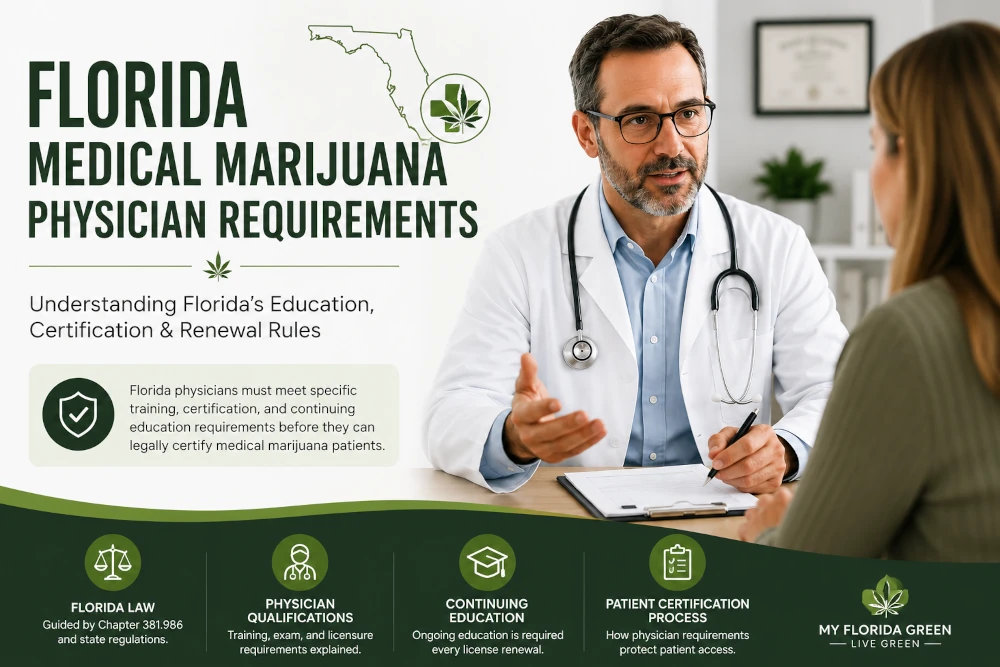
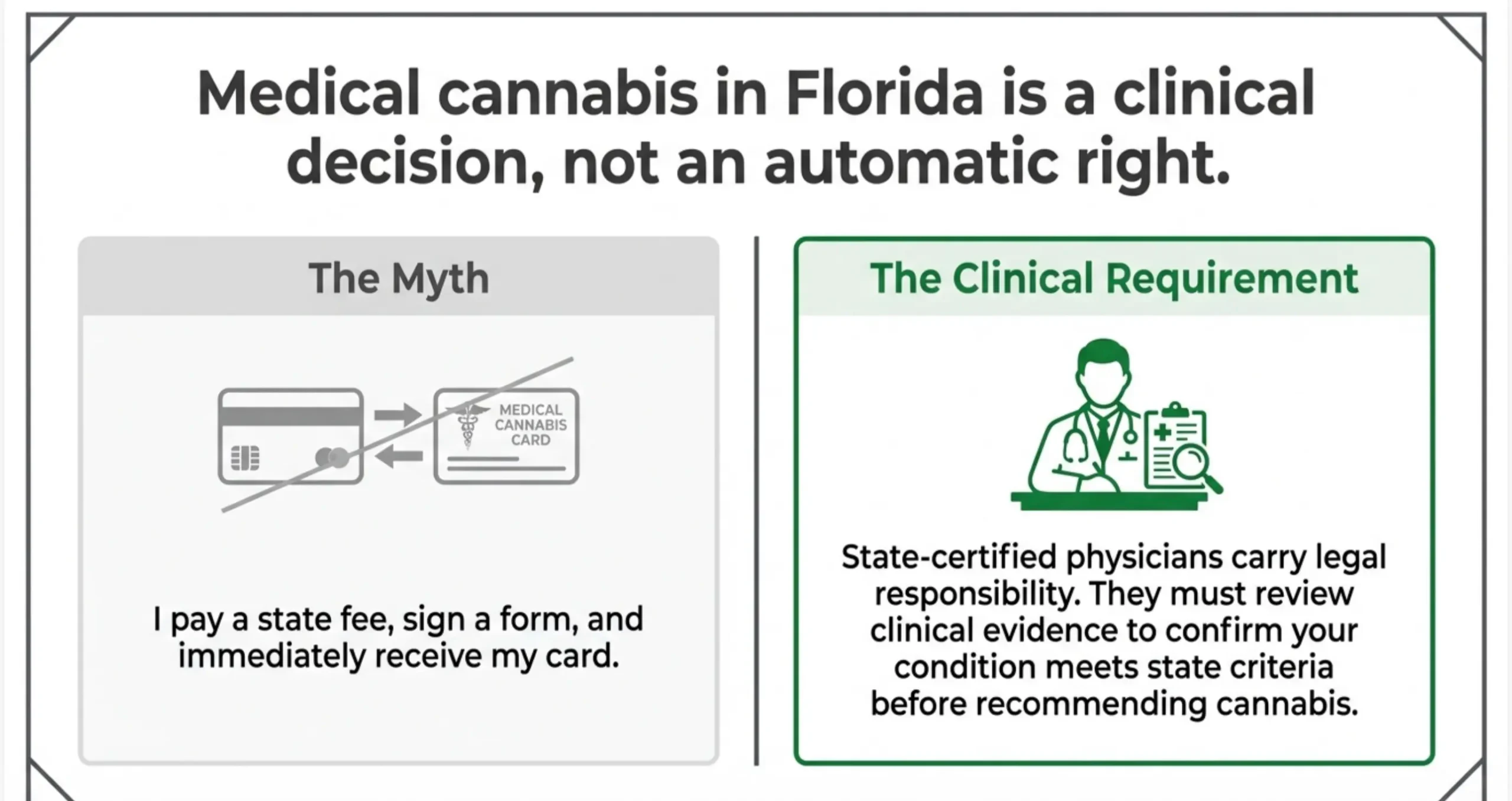
A state-certified marijuana physician Florida carries a significant professional and legal responsibility. Medical cannabis certification in Florida is not automatic. Patients must be evaluated by a physician licensed to recommend medical marijuana under state law. A physician who recommends cannabis without adequate clinical justification faces potential disciplinary action, license suspension, or regulatory scrutiny.
A state-certified cannabis physician needs to be reasonably satisfied that your qualifying condition exists and that it meets Florida’s clinical criteria. Records from treating physicians, specialists, or hospitals provide that confirmation with a level of authority that a patient’s self-report cannot.
The Qualifying Conditions Framework
Florida accepts over 50 medical conditions for medical marijuana cards under Florida Statute 381.986 and Florida Constitution Amendment 2. The most commonly approved conditions include cancer, epilepsy, glaucoma, HIV/AIDS, PTSD, Crohn’s disease, Parkinson’s disease, multiple sclerosis, chronic pain, anxiety, arthritis, migraines, and ALS.
Beyond this list, the Office of Medical Marijuana Use also issues medical cannabis cards to anyone suffering from a medical condition of the same kind or class as or comparable to any one of those listed above.
This comparable conditions clause gives experienced medical marijuana doctors in Florida significant clinical latitude. A patient with severe neuropathic pain, a chronic inflammatory condition, or an autoimmune disorder not explicitly listed may still qualify, but the approval pathway depends almost entirely on the quality of supporting documentation.
The Medical Records That Carry the Most Weight
-
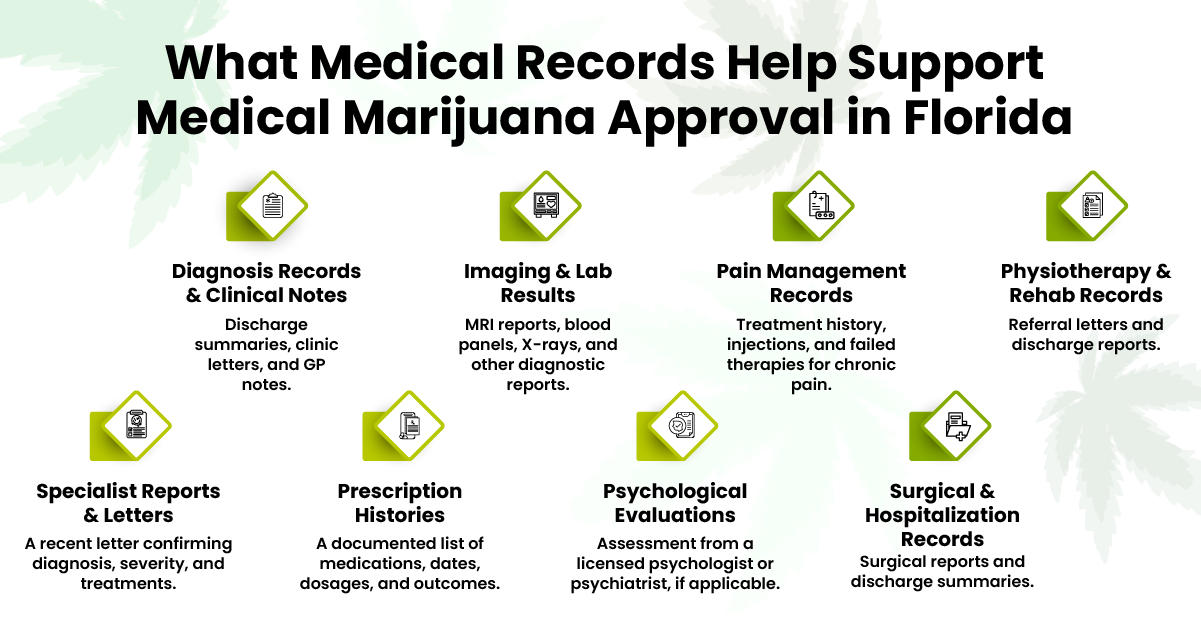
Specialist Reports and Letters
A specialist letter that confirms your diagnosis, describes the severity of your condition, outlines the treatments attempted, and documents your clinical trajectory gives a state-certified cannabis physician everything they need to make a confident recommendation. Where possible, request a recent letter from your specialist that is specifically addressed to a medical marijuana doctor and summarizes your condition, treatment history, and current status.
-
Diagnosis Records and Clinical Notes
Any formal documentation of your diagnosis, whether from a primary care physician, hospital consultant, or specialist, is valuable. This includes:
- Discharge summaries from hospital admissions related to your condition
- Clinic letters and follow-up notes from treating physicians
- Referral letters that describe your condition and the reasons for specialist involvement
- Operative or procedure notes where relevant
The more clearly these documents establish when your condition was diagnosed, how it has developed, and what the treating clinician’s assessment is, the stronger your application for a medical cannabis card will be.
-
Prescription Histories and Medication Records
A documented prescription history serves two functions in a medical marijuana evaluation. It confirms that your condition has been treated medically and demonstrates what has already been tried, providing the foundation for a medical cannabis physician to consider clinical cannabis as an adjunctive therapy. Bring a comprehensive medication list that includes:
- List of prescribed medications.
- The dates they were prescribed or discontinued.
- The dosages used along the treatment journey.
- Any drug allergies
-
Diagnostic Imaging and Laboratory Results
Many health conditions need imaging and laboratory testing as part of the diagnostic picture. If this is the case, you must bring relevant imaging reports and lab results as clinical evidence to your case. These reports can help state-certified cannabis physicians make an informed decision during medical marijuana evaluations.
-
Psychological Evaluations and Mental Health Records
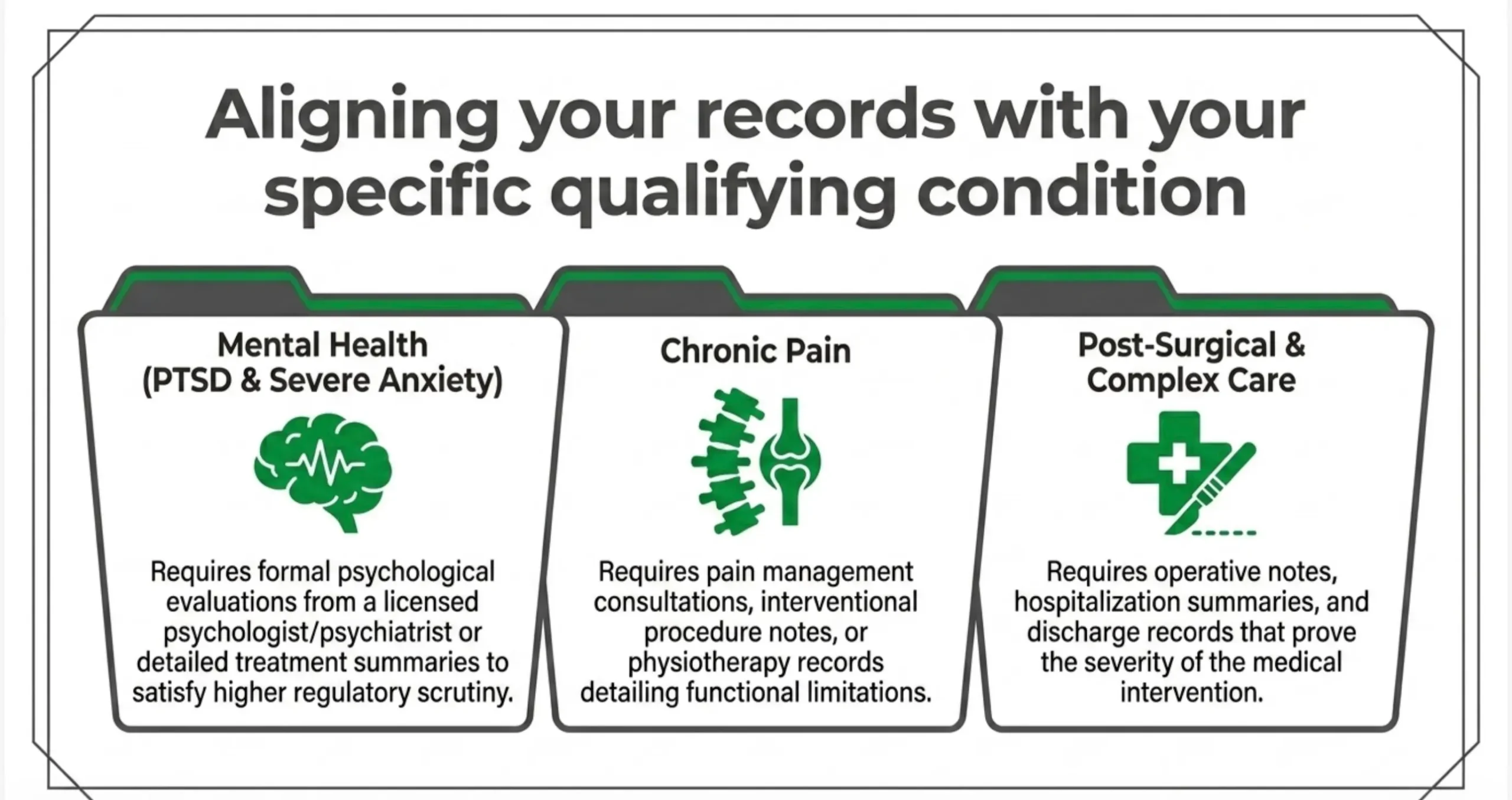
Mental health as a qualifying condition is sometimes held to a higher standard because it is more difficult to assess. For patients seeking medical marijuana Florida based on PTSD, severe anxiety disorder, or other mental health qualifying conditions, documented psychological assessments are particularly important. A formal evaluation from a licensed psychologist or psychiatrist, a diagnosis letter, or a treatment summary provides the clinical evidence a state-certified cannabis physician needs to certify these conditions with confidence.
-
Pain Management and Physiotherapy Records
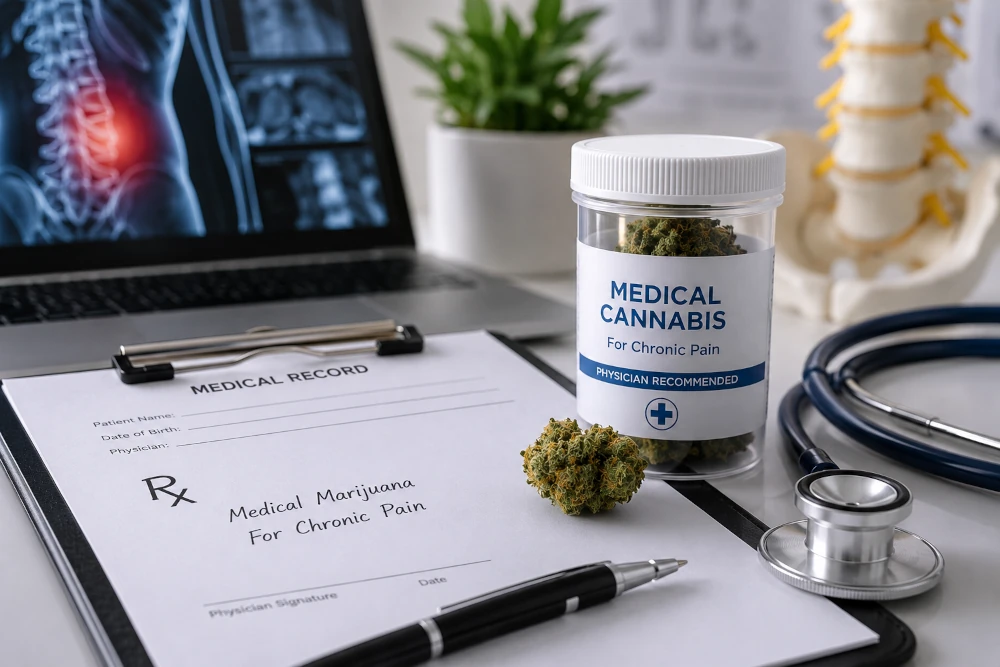
Chronic pain is the most common qualifying condition for a medical marijuana card Florida. If chronic pain is your qualifying condition, bring documentation from any pain management consultations, physiotherapy referrals, and interventional procedures from treating clinical cannabis clinicians that describe the nature, severity, and persistence of your pain.
-
Surgical and Hospitalization Records
Where your qualifying condition Florida has resulted in surgery, hospitalization, or emergency treatment, those records are clinically significant. If your condition has been serious enough to require medical intervention of this kind, that history belongs in the documentation you bring to your medical marijuana evaluation.
-
Physiotherapy records
Physiotherapy records document the physical impact of your condition and the conservative treatments already attempted. They are particularly relevant for chronic pain, musculoskeletal conditions, and post-surgical recovery cases. Bringing these records gives your state-certified cannabis physician a clearer picture of your functional limitations and treatment history.
These records allow for an in-depth clinical cannabis evaluation, where a certified medical marijuana doctor can make an informed decision.
How a State-Certified Cannabis Physician Uses Your Records
Understanding how a clinical cannabis doctor Florida actually uses your documentation helps you present it effectively. The physician’s evaluation for a medical marijuana card follows a structured sequence. They begin by reviewing:
- Medical background to establish the clinical foundation
- Evaluation of reports to confirm whether your condition meets Florida’s qualifying criteria.
- Assessment of the severity and functional impact of the condition.
- Screening for contraindications and risk factors.
Your medical records contribute to every stage of this process and can make the process of obtaining a clinical cannabis card efficient.
The Cannabis Certification Process After Approval
Once a state-certified cannabis physician determines that you qualify, the certification pathway is straightforward. Once approved, the physician enters your information into the Medical Marijuana Use Registry.
- Once the doctor has added you to the registry, an email will be sent to you containing a link to complete your application online.
- The Florida Department of Health processes your application after your same-day certification.
- You can begin purchasing medical cannabis as soon as you are approved.
- Even before the medical marijuana card arrives, you can use the temporary email approval and a valid photo ID.
- The state application requires your Florida ID or proof of residency, a photograph, and payment of the state application fee.
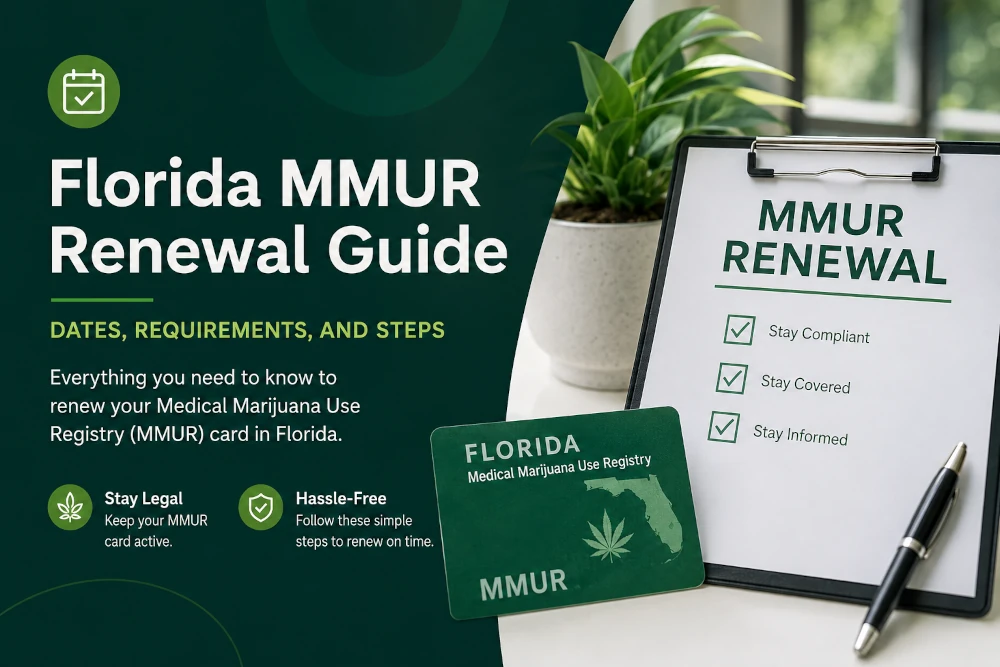
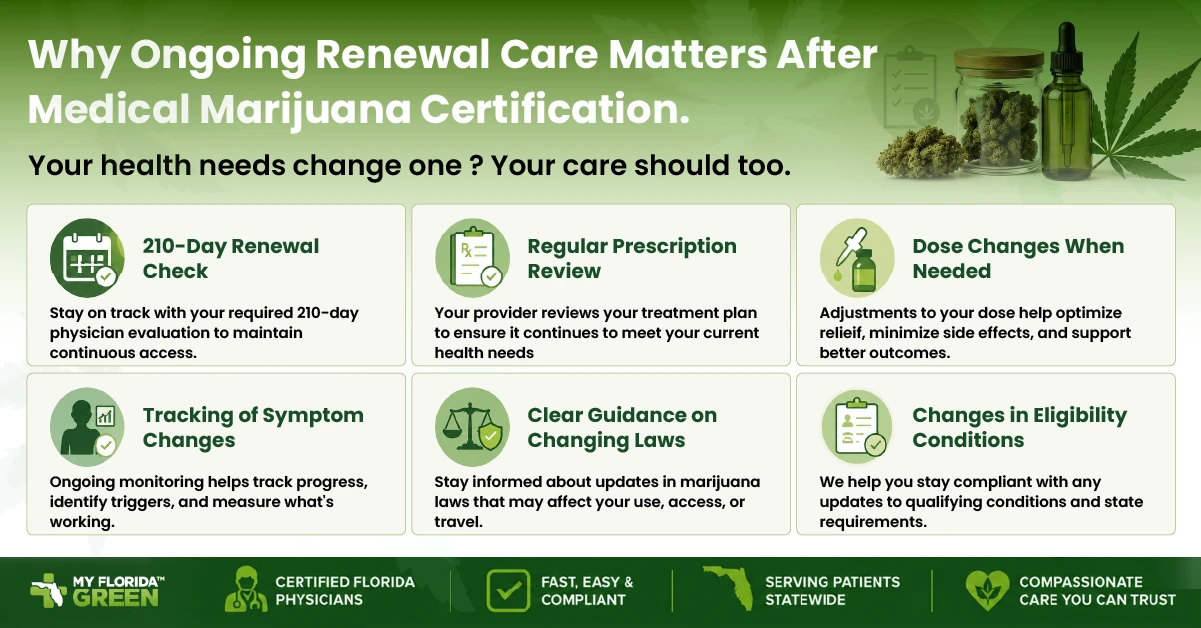
A medical cannabis card requires annual renewal. Your certifying cannabis physician will need to recertify your qualifying condition each year, which makes the ongoing relationship with your medical marijuana doctor an important part of long-term access to medical cannabis in Florida.
Your Medical Marijuana Evaluation Partner in Florida
Navigating the medical documentation requirements for a Florida medical marijuana card is easier with an experienced, knowledgeable clinical team on your side. My Florida Green is one of Florida’s most established medical marijuana practices, with state-certified cannabis physicians operating across multiple locations throughout the state, including Sarasota, Naples, Fort Myers, Melbourne, Jacksonville, St. Petersburg, and Hialeah.
My Florida Green’s patient-centred approach begins before the appointment. Their team helps patients understand exactly which medical records are most relevant to their qualifying condition, how to request records from treating physicians and hospitals, and what to expect during the evaluation itself. You can explore our blogs for guidance on preparing for your evaluation.
My Florida Green’s certified physicians are deeply experienced in Florida’s qualifying conditions framework, including the comparable conditions provision, which means they are equipped to advocate for patients whose conditions may not appear on the standard list but who have a genuine clinical case for medical cannabis. The practice covers the full clinical cannabis certification process, from the initial evaluation through MMUR registration, state application submission, and annual recertification.
Summary
Obtaining a medical marijuana card in Florida is a physician-led clinical process in which the quality of your supporting documentation plays a significant role in the outcome.
The most valuable records to bring include specialist reports and letters; diagnosis documentation and clinical notes; prescription histories; diagnostic imaging and lab results; psychological evaluations where relevant; pain management records; and surgical or hospitalization records.
A state-certified cannabis physician uses medical records to confirm qualifying conditions, assess severity and functional impact, review treatment history, and make a confident benefit-risk determination. Well-organized, relevant documentation makes that process faster, more straightforward, and more likely to result in approval.
My Florida Green connects patients across Florida with experienced certified cannabis physicians who understand the documentation requirements and can help patients present their clinical case as effectively as possible from the first appointment through annual recertification.
FAQs—Frequently Asked Questions
-
Do I legally need medical records to get a medical marijuana card in Florida?
No, Florida cannabis law does not require you to submit prior medical records as part of your application. However, a state-certified cannabis physician must be clinically satisfied that your qualifying condition exists before they can certify you. Records from treating physicians, specialists, or hospitals provide that confirmation far more convincingly than a self-report alone. Without supporting documentation, approval is possible but significantly less certain. particularly for conditions like chronic pain, PTSD, and anxiety that cannot be verified through a physical examination.
-
Which medical records are most important to bring to my evaluation?
The records that are most important are specialist reports, clinical notes from treating physicians, prescription histories, and any diagnostic imaging or lab results. For mental health qualifying conditions such as PTSD or severe anxiety, a formal psychological evaluation or a psychiatrist’s letter is especially important. Pain management records, physiotherapy referrals, and surgical or hospitalization notes are also valuable where applicable. Bring anything that documents when your condition was diagnosed, how it has progressed, and what treatments you have received.
-
What if my condition is not on Florida’s standard qualifying conditions list?
Florida’s medical marijuana program includes a comparable conditions clause, which allows state-certified cannabis physicians to certify patients whose conditions are of the same kind or class as those listed under Amendment 2. If your condition is not explicitly named, strong supporting documentation becomes even more critical. A detailed specialist letter, a well-documented treatment history, and clear evidence of functional impact give your certifying physician the clinical basis to advocate for your approval under this provision.
-
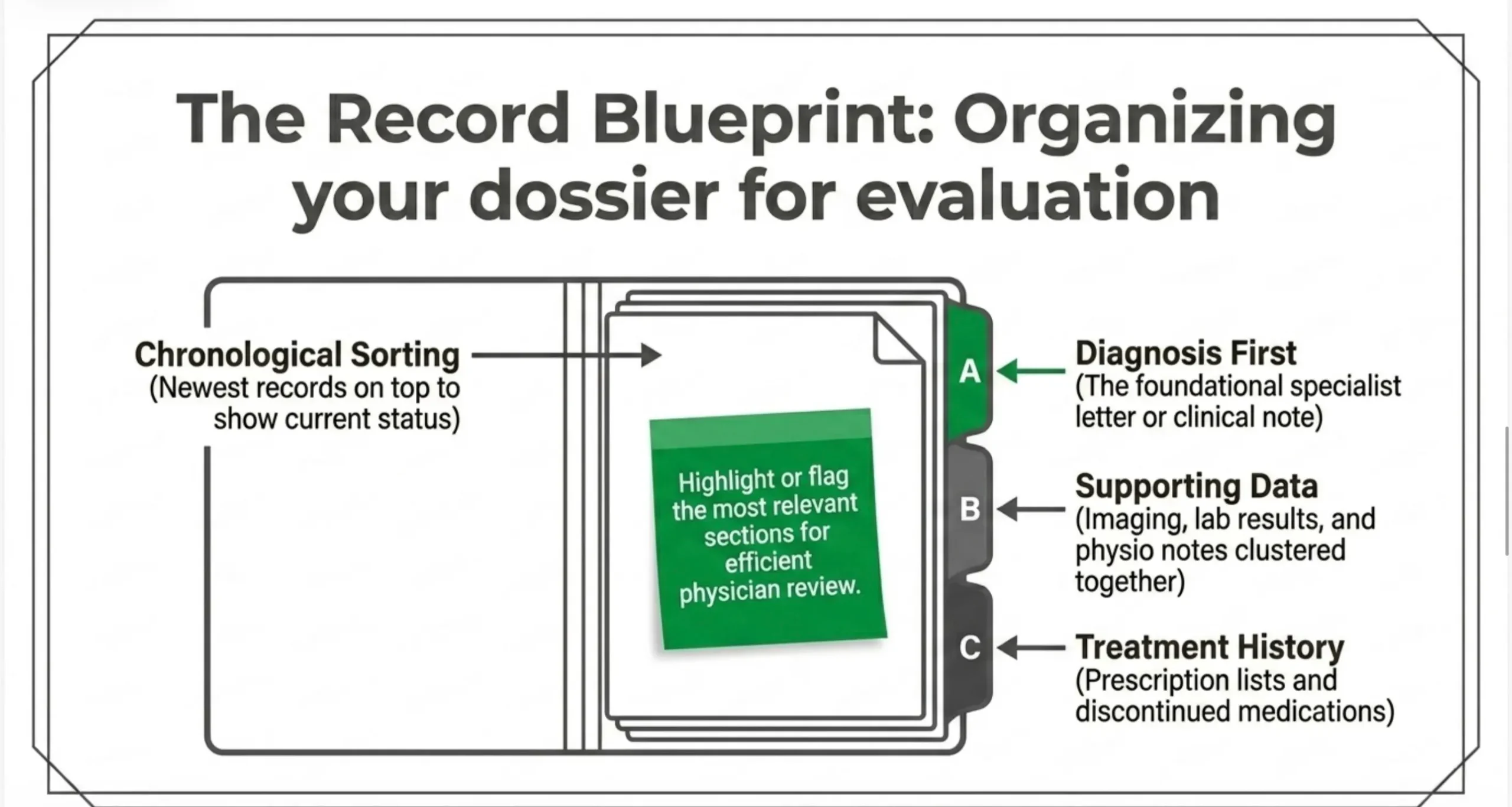
How should I organize my medical records before the appointment?
Gather records chronologically and group them by type, with diagnosis documents first. If you have a large volume of records, highlight or flag the most relevant sections so your physician can review them efficiently during the consultation. If you are unsure which records are most relevant to your qualifying condition, My Florida Green team can advise you before your appointment on what to request and how to present it.
About the Author
Dr. Tazeen T. Zaidi (MD) is a board-certified family physician based in Sanford, FL, with over 30 years of experience. She has been associated with providing medical marijuana evaluations as part of her practice in Florida. Dr. Zaidi is double certified in Medical Marijuana Medicine by the Society of Cannabis Clinicians and the American Academy of Cannabis Medicine. She has practiced for over 20 years and is dedicated to helping patients access safe and effective medical cannabis treatment.
Medical Disclaimer
The information provided in this video and/or article is for educational and informational purposes only and is not intended as medical advice. It should not be used as a substitute for professional medical diagnosis, treatment, or guidance from a qualified healthcare provider.
Always seek the advice of your physician or other licensed healthcare professional regarding any medical condition or treatment options. Never disregard professional medical advice or delay seeking care because of something you have read or viewed here.
Medical services, evaluations, certifications, and treatment recommendations are provided only after an individualized assessment by a licensed physician and are subject to applicable state laws and regulations.
If you experience a medical emergency, call 911 or contact your healthcare provider immediately.