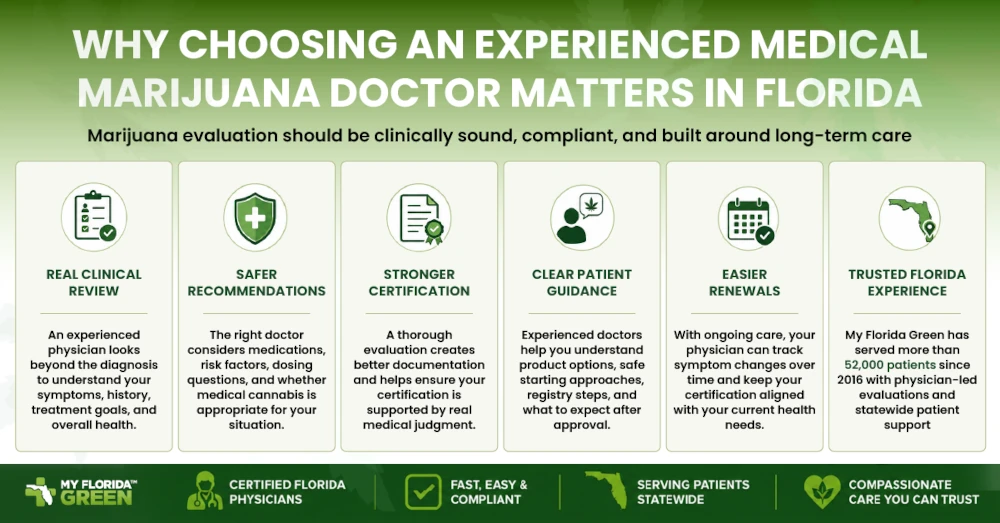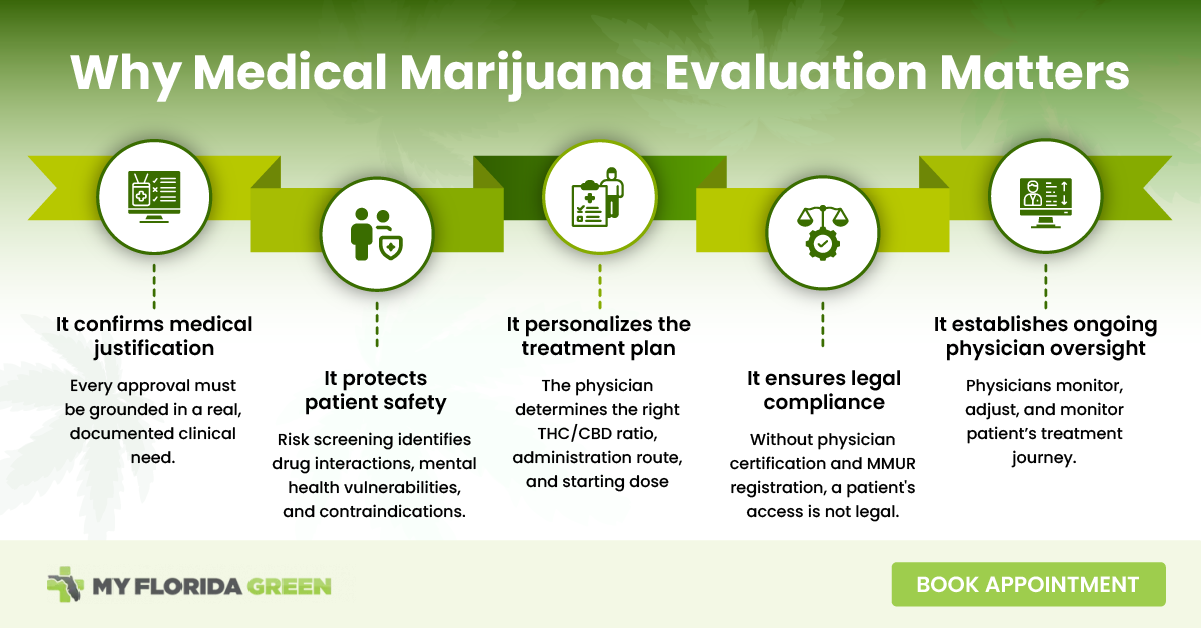
Most patients who look into Florida’s medical marijuana program assume the most important part is the paperwork. It isn’t. The most crucial part is the medical evaluation. Before a medical marijuana card is issued, all patients must see a state-certified marijuana physician for an evaluation. This evaluation is far more important than most people expect, and going in underprepared is the most common reason first-time applicants walk away without approval.
This article explains what that consultation involves, what physicians are looking for, and what patients can do to be in the best position.
How Does Florida’s Medical Marijuana Program Work?
Florida’s medical marijuana program is built on a straightforward premise: cannabis is a controlled medical therapy, and like any controlled therapy, access to it requires physician oversight. That means every patient who wants legal access must go through the same process:
- A clinical evaluation with a state-certified marijuana physician.
- Confirmation of a qualifying medical condition.
- Registration in the Medical Marijuana Use Registry (MMUR).
- A valid medical marijuana card issued by the state.
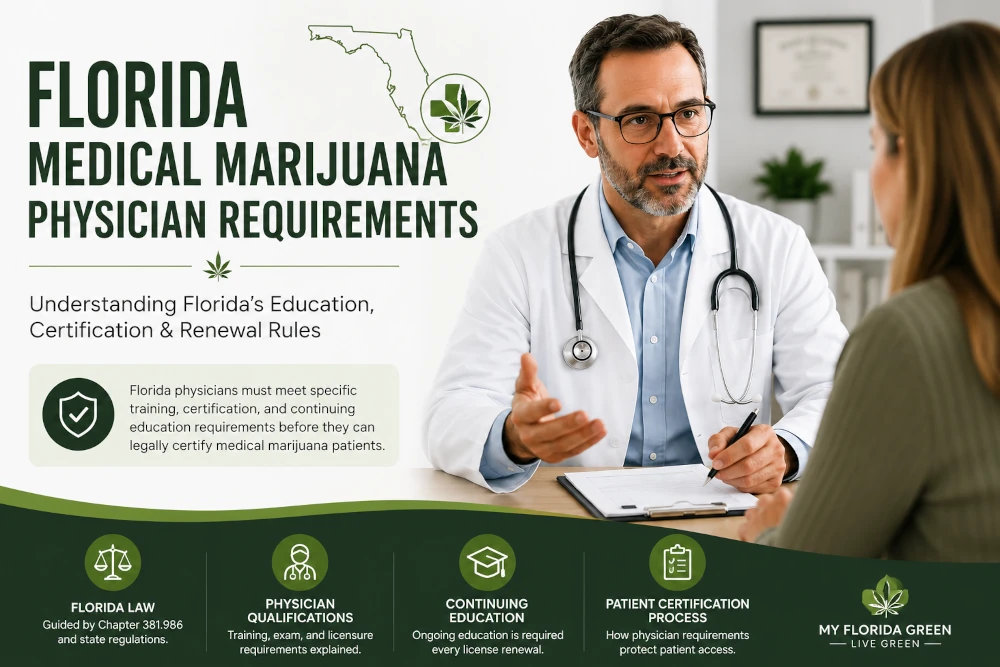
State-licensed marijuana physicians sit at the centre of the whole process; they evaluate eligibility, approve treatment, and remain responsible for the patient’s care throughout.
What is a medical marijuana evaluation?
A medical marijuana evaluation is a one-to-one clinical consultation. It is a structured assessment in which the physician gathers relevant clinical information to make a defensible medical decision about whether cannabis is appropriate for that specific patient.
The medical marijuana physician needs to confirm eligibility, assess risk, and understand how the condition affects the patient’s life during medical marijuana evaluation.
What does the physician assess?
- Medical History
The consultation opens with a review of the patient’s medical background. During the assessment, the licensed physician wants to understand:
- What conditions have been diagnosed.
- How symptoms have changed or progressed over time.
- What treatments have been tried, medications, procedures, therapies, and how well they worked.
- What the patient is currently taking, including any supplements or over-the-counter medications.
- Qualifying Condition
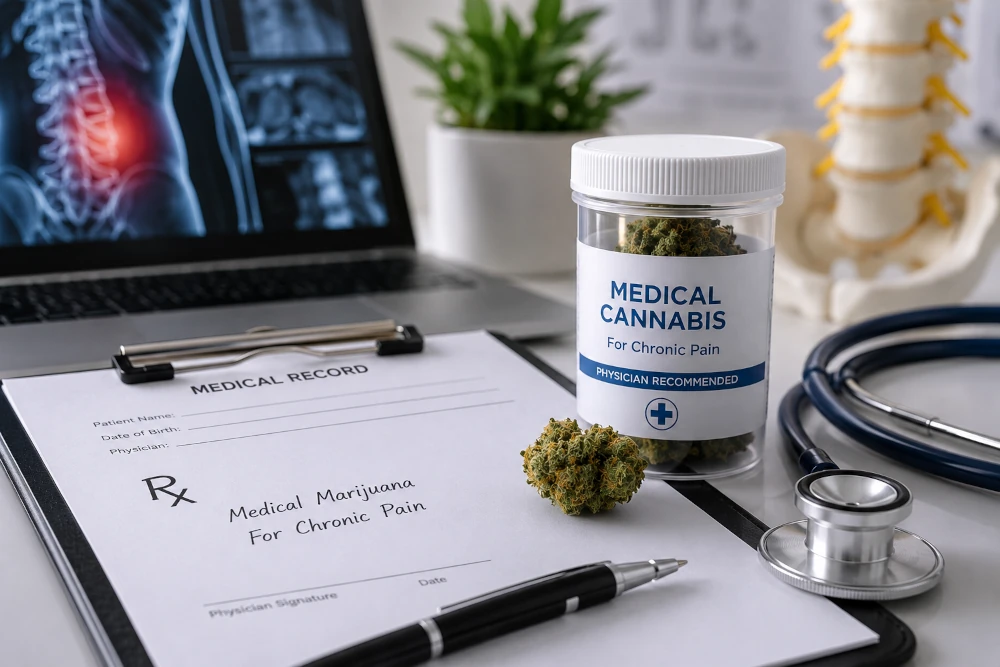
Florida law has developed a list of qualifying conditions that make a patient eligible for the medical marijuana program. The most commonly approved conditions include chronic pain, cancer, PTSD, epilepsy, multiple sclerosis, Parkinson’s disease, Crohn’s disease, HIV/AIDS, glaucoma, and anxiety.
Medical marijuana Florida law also allows physicians to certify patients whose conditions are “of the same kind or class” as those listed in the list of qualifying conditions.
- Symptom Severity and Daily Impact
A qualifying diagnosis is a necessary condition for medical marijuana card approval, but it is not sufficient on its own. The state-certified marijuana physician also needs to understand how the condition is actually affecting the patient’s life. That means asking about:
- Whether the patient can work or carry out everyday tasks.
- How sleep is affected.
- What physical limitations does the condition impose?
- What toll does it take emotionally and psychologically?
Experienced medical marijuana physicians can determine a patient’s eligibility based on the assessment.
- Safety Screening
Before approving any patient for a medical marijuana card, the physician conducts a risk assessment. Cannabis has real contraindications, and the evaluation process exists in part to identify them. The physician will look at:
- Whether any current medications interact with cannabinoids.
- Mental health history, particularly any personal or family history of psychosis or severe mood disorders
- Prior or current substance use, which requires careful clinical weighing rather than automatic disqualification
- Pregnancy or breastfeeding status
- Any other medical vulnerabilities relevant to how cannabis is likely to be tolerated
Medical marijuana evaluation depends on the physician’s assessment of the patient’s clinical needs.
- Prior Treatment History
The medical marijuana physicians will want to know which treatments have already been tried before they can recommend the patient for a medical marijuana card.
This is particularly relevant for conditions like chronic pain and neurological disorders, where the case for cannabis as an alternative or adjunct therapy is strongest when conventional options have been genuinely exhausted or have proven inadequate.
- The Final Clinical Determination
Once the physician has gathered all of this information, they make a decision. That decision weighs the likely therapeutic benefit of cannabis against the patient’s risk profile and any remaining treatment alternatives that haven’t been explored.
Patients who present clear, documented evidence of a qualifying condition, meaningful functional impairment, and a reasonable treatment history can apply for a medical marijuana card.
After Approval: The Certification Pathway
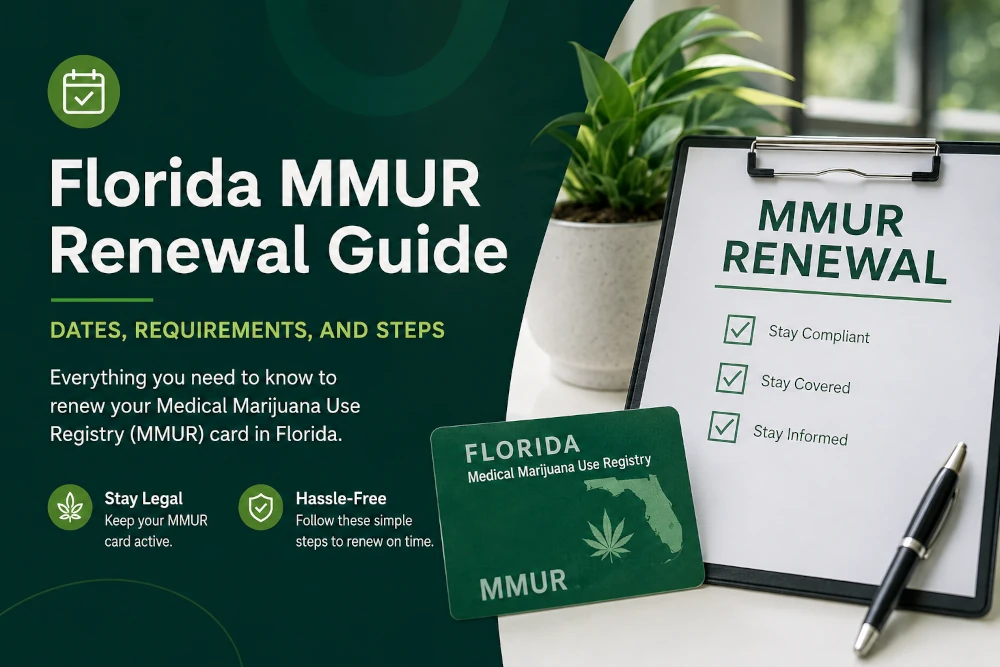
- MMUR Registration
If the physician approves the patient, they enter the certification into Florida’s Medical Marijuana Use Registry the same day. This is mandatory under state law and enables the patient to proceed to obtain a medical marijuana card.
- State Application
The patient then completes their own application through the OMMU online portal, uploading a
- Valid Florida ID
- Recent photo,
- Paying the state fee.
- Receiving the Card
State processing typically takes two to four weeks. The medical marijuana card is mailed once approved. Many patients can begin visiting licensed dispensaries using their MMUR status before the physical card arrives.
Accessing Medical Marijuana Products
With a valid medical marijuana card, patients have access to the full range of products available at Florida’s licensed dispensaries, including flower, edibles, oils and tinctures, vape products, and topicals, guided by their physician’s recommendations.
Treatment Personalization
Medical marijuana evaluation does not end with approval. The state-certified medical marijuana physician develops a treatment plan tailored to the patient’s condition, goals, and tolerance.
- THC vs CBD ratio
High-CBD, low-THC formulations suit patients with mild symptoms or conditions where psychoactive effects are undesirable. Balanced formulations work well for moderate conditions, including PTSD and chronic pain. Higher-THC options are reserved for severe, refractory symptoms where stronger analgesic or antiemetic effects are the clinical priority.
- Route of administration
State-certified physicians determine how quickly cannabis takes effect and how long it lasts.
- Inhalation delivers the fastest onset and is best suited for acute symptom flares.
- Edibles are slower but provide sustained relief, making them well-suited for chronic symptom management.
- Tinctures offer a middle ground with more precise dosing control.
- Topicals work locally without systemic effects, making them appropriate for joint and muscle pain.
- Medical Marijuana Dosing
Experienced state-certified medical marijuana physicians always start conservatively. The clinical standard is to begin at the lowest effective dose and increase gradually based on response, a principle commonly called “start low, go slow.” Microdosing, in which small, consistent amounts are taken throughout the day, is increasingly used to maintain symptom control while keeping side effects to a minimum.
- Ongoing Care and Follow-Up
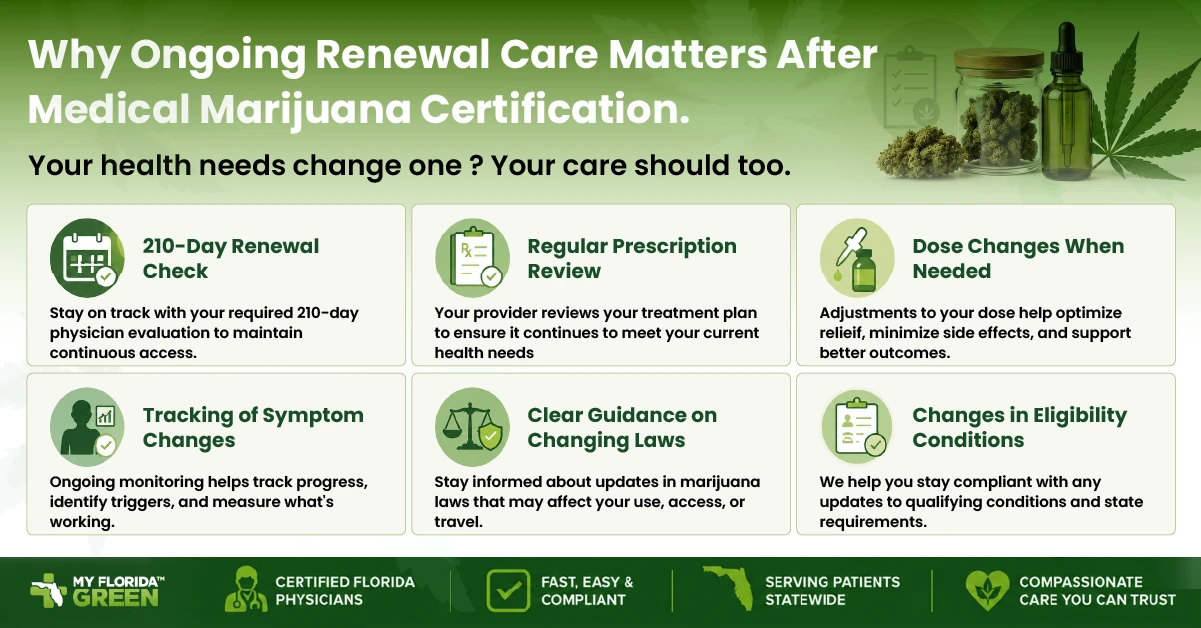
Medical marijuana evaluation is not a one-time event. Medical marijuana Florida law requires patients to maintain an active relationship with their certifying physician, with annual recertification mandatory. More frequent appointments are often appropriate in the early months of treatment while dosing is being calibrated.
Follow-ups serve a practical clinical purpose in the medical marijuana program. Physicians can adjust doses as tolerance or symptoms change, confirming that the treatment is achieving its goals, modifying strains or product types where needed, and ensuring continued compliance with state regulations.
Why Some Patients Don’t Qualify?
Not every consultation during medical marijuana evaluation results in approval. The most common reasons for denial are:
- No condition that meets Florida’s qualifying criteria.
- Medical records that are absent, incomplete, or too outdated.
- A risk profile that makes cannabis clinically inadvisable.
- Symptoms that are not severe or persistent enough to justify cannabis as a treatment.
- Active contraindications related to current medications or medical conditions.
Most of these are not permanent disqualifiers. They are often addressable with better preparation, updated records, or a follow-up appointment once an underlying issue has been stabilized.
How to Prepare for a medical marijuana evaluation
What documents to bring to the consultation
- Medical records from treating physicians, specialists, or hospitals.
- A current, complete medication list.
- Documentation of prior treatments and their outcomes.
All patients should be transparent with the medical marijuana physician during the evaluation. The more specific the patient is, the more accurately the physician can assess the case.
The My Florida Green Difference
My Florida Green works with patients across Florida to make every stage of that process clear and manageable. With certified medical marijuana physicians operating in Sarasota, Naples, Fort Myers, Melbourne, Jacksonville, St. Petersburg, and Hialeah, My Florida Green brings clinical experience and practical knowledge of Florida’s program together in one place. Staff help patients prepare before their appointment; physicians conduct thorough and honest evaluations, and the team supports patients through MMUR registration, state application, and ongoing recertification.
If you are trying to understand whether you qualify or you are ready to begin the process, My Florida Green is a straightforward place to start.
Summary
A medical marijuana evaluation is a real clinical consultation, not a formality. The physician reviews medical history, confirms a qualifying condition, assesses symptom severity, screens for safety risks, and makes a judgment call based on all of it.
Patients who arrive prepared, with comprehensive records and a clear account of how their condition affects their daily life, are in the best position to qualify. Those who treat the appointment casually or arrive without documentation face a much steeper path to approval.
The medical marijuana program Florida exists for good reasons. Understanding it is the first step towards getting a medical marijuana card.
FAQ – Frequently Asked Questions
- Can I qualify without medical records?
A consultation can take place without prior records, but your chances of approval are significantly stronger with supporting documentation. State-certified Florida physicians need to confirm your qualifying condition and records from specialists, prescription histories, diagnostic results, or prior treatment. Conditions like chronic pain, PTSD, and anxiety particularly benefit from documented treatment history. If you don’t have records ready, My Florida Green staff can help you identify what to request before your appointment.
- What does a medical marijuana doctor evaluate during the appointment?
A medical marijuana doctor conducts a structured clinical evaluation covering your full medical history, current medications, and prior treatments. They confirm whether your condition meets Florida’s qualifying criteria under Amendment 2. They assess the severity of the symptoms and how they affect patients’ daily life, sleep, mobility, and work. Patients cannot self-certify or bypass this process under Florida law.
- How long does the medical marijuana evaluation process take?
The consultation typically takes 15–30 minutes. If approved, your physician enters your certification into Florida’s MMUR the same day. You then submit your state application online through the OMMU portal, uploading your Florida ID and paying the $75 state fee. Processing takes two to four weeks, after which your card is mailed to you. Many patients can visit a licensed dispensary using their MMUR status before the physical card arrives.
About the Author
Dr. Tazeen T. Zaidi (MD) is a board-certified family physician based in Sanford, FL, with over 30 years of experience. She has been associated with providing medical marijuana evaluations as part of her practice in Florida. Dr. Zaidi is double certified in Medical Marijuana Medicine by the Society of Cannabis Clinicians and the American Academy of Cannabis Medicine. She has practiced for over 20 years and is dedicated to helping patients access safe and effective medical cannabis treatment.
Medical Disclaimer
The information provided in this video and/or article is for educational and informational purposes only and is not intended as medical advice. It should not be used as a substitute for professional medical diagnosis, treatment, or guidance from a qualified healthcare provider.
Always seek the advice of your physician or other licensed healthcare professional regarding any medical condition or treatment options. Never disregard professional medical advice or delay seeking care because of something you have read or viewed here.
Medical services, evaluations, certifications, and treatment recommendations are provided only after an individualized assessment by a licensed physician and are subject to applicable state laws and regulations.
If you experience a medical emergency, call 911 or contact your healthcare provider immediately.