Every year, hundreds of thousands of Florida residents ask the same question: Does my condition qualify for a medical marijuana card? It is a question that sits at the intersection of clinical need, legal access, and quality of life, and for the patients who ask it, the answer can be genuinely life-changing.
Florida operates one of the most established and widely accessible medical marijuana programs in the United States. Since voters approved Constitutional Amendment 2 in 2016 and the Florida Legislature enacted the Compassionate Use of Medical Cannabis Act under Florida Statute 381.986. The program has grown to serve hundreds of thousands of patients across the state. The law is clear, the process is structured, and for patients with qualifying conditions, the pathway to a medical cannabis card is more accessible today than it has ever been.
This article provides a comprehensive guide to the most commonly approved qualifying conditions for marijuana use in Florida and explains the legal framework that governs them. Whether you are living with chronic pain, managing the symptoms of PTSD, navigating a cancer diagnosis, or wondering whether your condition might qualify under Florida’s medical marijuana laws, this guide is written for you.
How Florida Defines Qualifying Conditions
Florida’s medical marijuana laws are grounded in two legal instruments.
- The first is the Florida constitution, which was passed by 71% of Florida voters in 2016 and enshrined the right of qualifying patients to access medical cannabis under physician supervision.
- The second is Florida Statute 381.986, which established the regulatory and clinical framework through which the program operates.
Under these medical cannabis laws, a Florida-licensed marijuana physician can recommend it to patients who meet the clinical criteria for one or more qualifying conditions. The recommendation is not a prescription; it is a physician certification that the patient has a qualifying condition and can safely use medical marijuana for medicinal purposes.
The Role of the Office of Medical Marijuana Use
The Office of Medical Marijuana Use (OMMU), a division of the Florida Department of Health, administers the state’s program. It maintains the Medical Marijuana Use Registry (MMUR) and oversees the licensing of dispensaries, the approval of product types, and the enforcement of program regulations.
When a state-licensed cannabis doctor certifies a patient, they enter the certification directly into the MMUR, triggering the patient’s ability to apply for their physical medical marijuana card.
What are the qualifying conditions for a medical marijuana card?
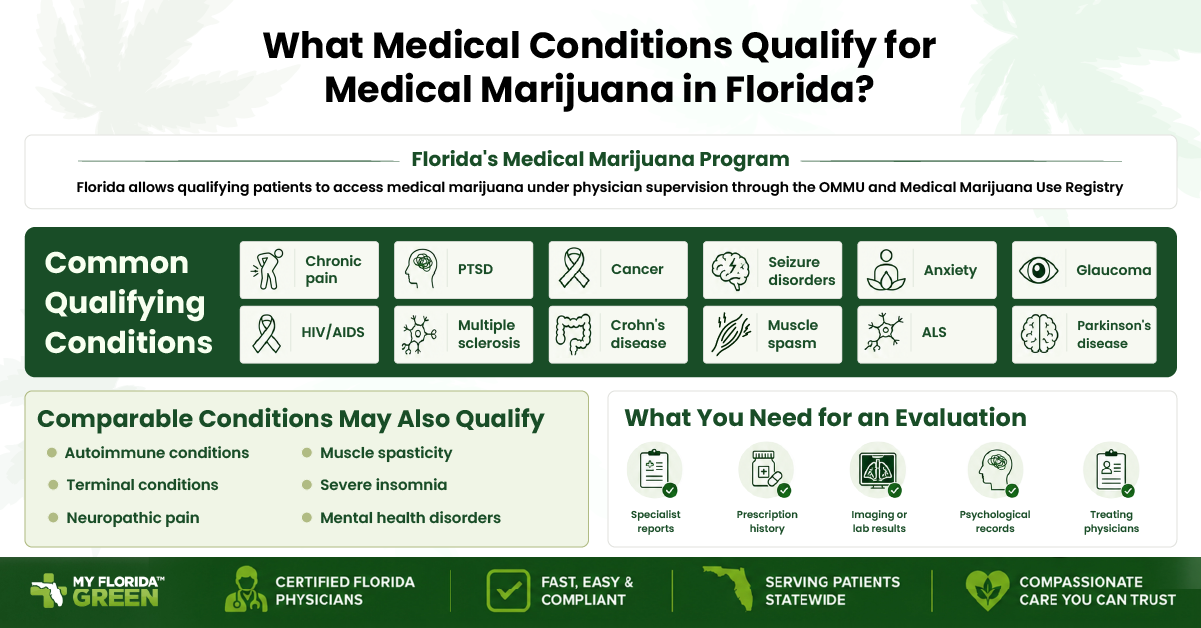
The State of Florida has developed a list of conditions that serve as qualifying conditions for marijuana use. The following conditions are included in the list of qualifying conditions:
- Anxiety.
- Severe & Chronic Pain.
- Migraine Headaches.
- Cancer.
- Back Pain.
- Rheumatoid Arthritis.
- Diabetes.
- Parkinson’s Disease.
- Muscular Dystrophy.
- Multiple Sclerosis (MS).
- Insomnia & Sleep Disorders.
- Severe Nausea.
- Epilepsy.
- Hepatitis C
- HIV/AIDS.
- Irritable Bowel Syndrome (IBS).
- Muscle Spasms.
- Post-Traumatic Stress Disorder (PTSD).
Additionally, state-licensed marijuana physicians may approve patients with conditions of similar severity, allowing flexibility for individuals. If the patient’s symptoms are not listed but still significantly impact daily life, an experienced cannabis doctor can recommend them for a medical marijuana card.

The Most Commonly Approved Qualifying Conditions in Florida
Chronic Pain
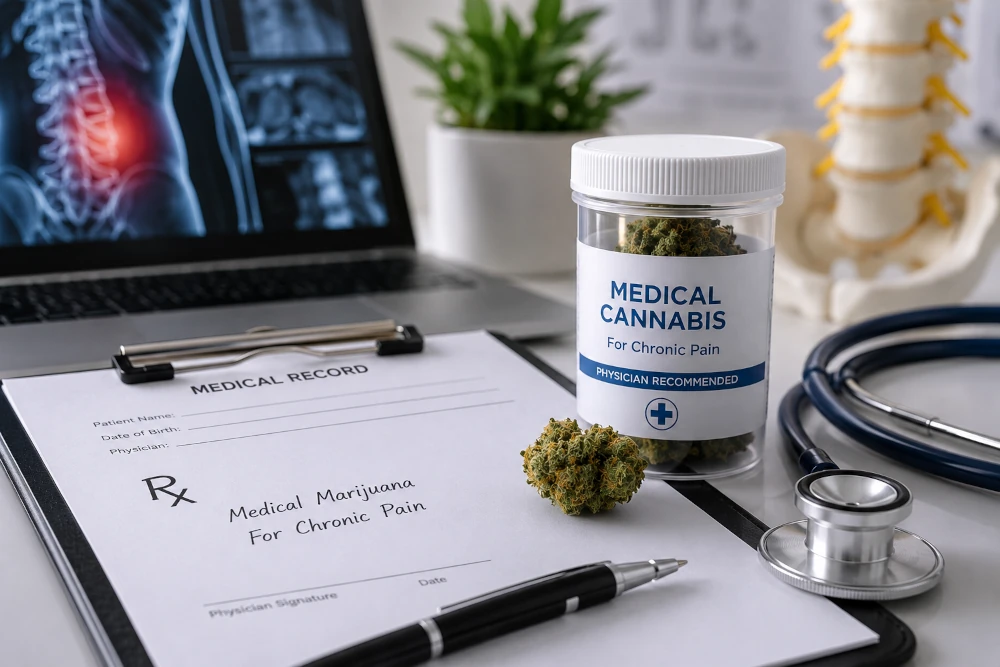
Chronic pain is the most commonly cited qualifying condition among Florida medical marijuana patients. It encompasses a wide spectrum of pain-related diagnoses from musculoskeletal pain and neuropathic pain through to pain associated with degenerative conditions, failed surgical interventions, and inflammatory disease. Under Florida’s medical marijuana laws, chronic pain qualifies when it is persistent and when it has not responded adequately to conventional treatments.
Post-Traumatic Stress Disorder (PTSD)
Post-traumatic stress disorder is one of the most significant and frequently approved qualifying conditions in Florida’s medical marijuana program. The therapeutic role of cannabis in managing its symptoms, particularly the hyperarousal and sleep disturbance in PTSD, is making it a safer and natural alternative.
Cancer
Florida law covers all forms of cancer as a qualifying condition for a medical cannabis card with no restriction on type, stage, or treatment status. Active treatment, remission, and long-term treatment consequences all qualify. Medicinal cannabis addresses the multi-dimensional burden cancer creates: chemotherapy-induced nausea, cancer-related pain, neuropathy, appetite loss, sleep disturbance, and treatment-related anxiety. For many patients, it provides relief that conventional treatments alone cannot deliver.
Epilepsy and Seizure Disorders
Under the current medical cannabis program, epilepsy and all related seizure disorders qualify for a full medical cannabis card with access to the complete range of approved cannabis products. This gives patients and their state-licensed cannabis doctor considerably more flexibility in designing an effective treatment approach.
Anxiety
Anxiety disorders represent one of the most significant growth areas in Florida’s medical marijuana patient population. While anxiety was not included in the original qualifying condition list, it has been incorporated into the program and is now one of the most commonly cited qualifying diagnoses at medicinal cannabis evaluations across the state.
Glaucoma
Glaucoma is one of Florida’s original qualifying conditions for marijuana and was included in the program from its earliest stages, reflecting the well-established scientific understanding of cannabis’s ability to reduce intraocular pressure. However, only an experienced ophthalmologist can determine if a patient can get a medical marijuana card for their glaucoma.
Multiple Sclerosis
Multiple sclerosis (MS) is a chronic autoimmune neurological condition that causes progressive damage to nerve fibers. Medicinal cannabis is particularly well evidenced for the management of MS-related spasticity and pain. Cannabinoids have demonstrated antispasmodic properties that can meaningfully reduce the muscle stiffness and involuntary spasms that are among the most functionally limiting features of the condition.
Crohn’s Disease and Inflammatory Bowel Disease
Crohn’s disease is an explicitly named qualifying condition for marijuana under Florida’s cannabis laws. Cannabis has demonstrated anti-inflammatory properties alongside benefits for pain management, appetite stimulation, and the psychological impact of living with a chronic, unpredictable gastrointestinal condition.
Neurological Conditions in Florida’s Program
Both Parkinson’s disease and amyotrophic lateral sclerosis (ALS) are explicitly included as qualifying conditions under Florida’s medical marijuana laws, reflecting the significant unmet need in these patient populations and the growing evidence base for cannabis in neurological disease management.
Parkinson’s patients frequently use medicinal cannabis for tremor management, sleep disturbance, pain, and the anxiety associated with disease progression. ALS patients may find that medical marijuana provides meaningful relief for muscle spasticity, pain, sleep disruption, and the psychological burden of their diagnosis when few other effective options exist.
Conditions That May Qualify Under the Comparable Conditions Clause
Florida’s medical marijuana laws include a provision that allows a state-licensed cannabis doctor to certify any medical condition of the same kind or class as those named in the statute.
Conditions that commonly qualify under this provision include, but are not limited to:
- Neuropathic pain conditions including diabetic neuropathy, postherpetic neuralgia, complex regional pain syndrome, and chemotherapy-induced peripheral neuropathy.
- Autoimmune and inflammatory conditions, including lupus, rheumatoid arthritis, psoriatic arthritis, and ankylosing spondylitis.
- Severe treatment-resistant insomnia associated with a documented medical or psychiatric condition rather than as a primary standalone diagnosis.
- Muscle spasticity including conditions other than MS that cause significant spasticity and associated pain, such as spinal cord injuries and cerebral palsy.
- Terminal conditions may qualify on the basis of symptom management needs, comfort care goals, and quality of life considerations.
The Medicinal Cannabis Evaluation Process
The medicinal cannabis evaluation is the clinical and legal heart of the medical marijuana application process. State-licensed cannabis physicians are pivotal to the evaluation process. They are the only ones authorized to recommend a patient for a medical marijuana card.
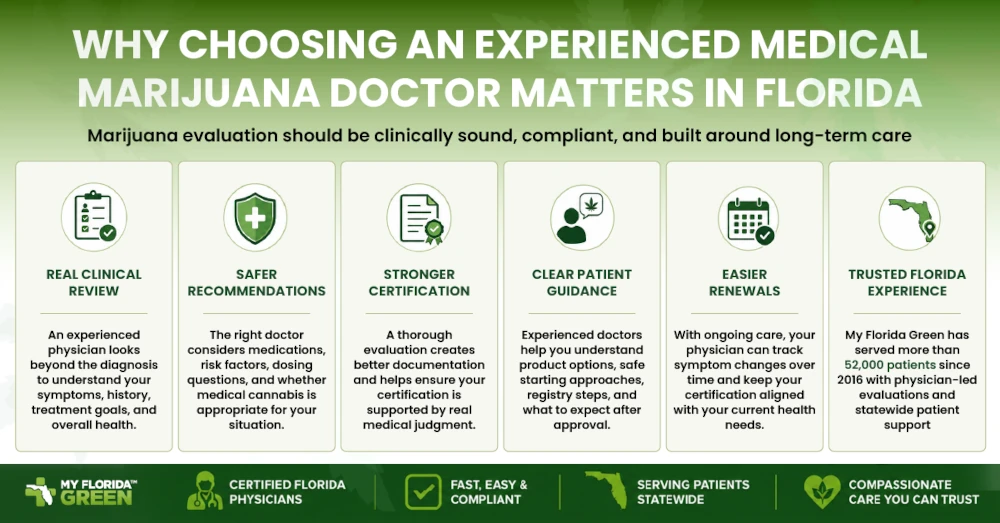
The cannabis evaluation process covers a structured clinical assessment of the patient’s medical history, qualifying condition, current medications, prior treatment attempts, and the functional impact of the condition on daily life. The state-licensed cannabis doctor will assess whether the patient meets Florida’s qualifying criteria and make a clinical judgment about whether medicinal cannabis is an appropriate and beneficial treatment option.

My Florida Green: Connecting Florida Patients to Qualified Care
My Florida Green is one of Florida’s most established medical marijuana practices, with state-licensed cannabis doctors operating across multiple locations throughout the state.
My Florida Greens‘ physicians bring deep familiarity with the full scope of Florida’s medical marijuana laws, including the comparable conditions provision. They have extensive experience evaluating patients with a full range of qualifying conditions for marijuana use, from straightforward chronic pain presentations to complex multi-condition cases.
My Florida Green’s proprietary patient management software integrates the entire process from eligibility confirmation and documentation preparation through the medicinal cannabis evaluation to MMUR registration. The platform transforms all stages into a single seamless workflow, removing administrative barriers most patients encounter when navigating the process independently.
Summary
Florida’s medical marijuana program is one of the most comprehensive and patient-accessible in the United States. Florida medical marijuana evaluation covers a wide range of qualifying conditions under a legal framework. The conditions most commonly approved at medicinal cannabis evaluations across Florida include chronic pain, PTSD, cancer, epilepsy, anxiety, glaucoma, HIV/AIDS, multiple sclerosis, Crohn’s disease, Parkinson’s disease, and ALS.
Beyond these explicitly listed conditions, Florida’s medical marijuana laws allow a state-licensed cannabis doctor to certify patients with comparable conditions of the same kind or class.
The pathway to a medical cannabis card begins with a marijuana evaluation conducted by a qualified medical marijuana doctor. The evaluation process is supported by relevant clinical documentation and completed through the Florida Department of Health’s OMMU portal.
With the right medical practice and the right preparation, most patients with qualifying conditions for marijuana can complete the process and access licensed dispensaries in two to four weeks.
My Florida Green’s state-licensed cannabis doctors serve patients across Florida with clinical expertise, legal knowledge, and a patient-centered approach. Visit myfloridagreen.com to find out whether you qualify and begin your journey to better-managed and well-supported care.
FAQ’S – Frequently Asked Questions
1: What conditions qualify for a medical marijuana card in Florida?
Common qualifying conditions include chronic pain, PTSD, cancer, epilepsy, anxiety, glaucoma, HIV/AIDS, multiple sclerosis, Crohn’s disease, Parkinson’s disease, ALS, and other comparable medical conditions.
Can I qualify for medical marijuana in Florida if my condition is not listed?
Yes. Florida allows licensed marijuana physicians to certify patients with comparable conditions if the condition is similar in severity, symptoms, or clinical impact to a listed qualifying condition.
What happens during a medical marijuana evaluation in Florida?
A licensed cannabis doctor reviews your medical history, current condition, symptoms, prior treatments, medications, and the impact of your condition on daily life to determine whether medical marijuana is appropriate.
About the Author
Dr. Tazeen T. Zaidi (MD) is a board-certified family physician based in Sanford, FL, with over 30 years of experience. She has been associated with providing medical marijuana evaluations as part of her practice in Florida. Dr. Zaidi is double certified in Medical Marijuana Medicine by the Society of Cannabis Clinicians and the American Academy of Cannabis Medicine. She has practiced for over 20 years and is dedicated to helping patients access safe and effective medical cannabis treatment.
Medical Disclaimer
The information provided in this video and/or article is for educational and informational purposes only and is not intended as medical advice. It should not be used as a substitute for professional medical diagnosis, treatment, or guidance from a qualified healthcare provider.
Always seek the advice of your physician or other licensed healthcare professional regarding any medical condition or treatment options. Never disregard professional medical advice or delay seeking care because of something you have read or viewed here.
Medical services, evaluations, certifications, and treatment recommendations are provided only after an individualized assessment by a licensed physician and are subject to applicable state laws and regulations.
If you experience a medical emergency, call 911 or contact your healthcare provider immediately.