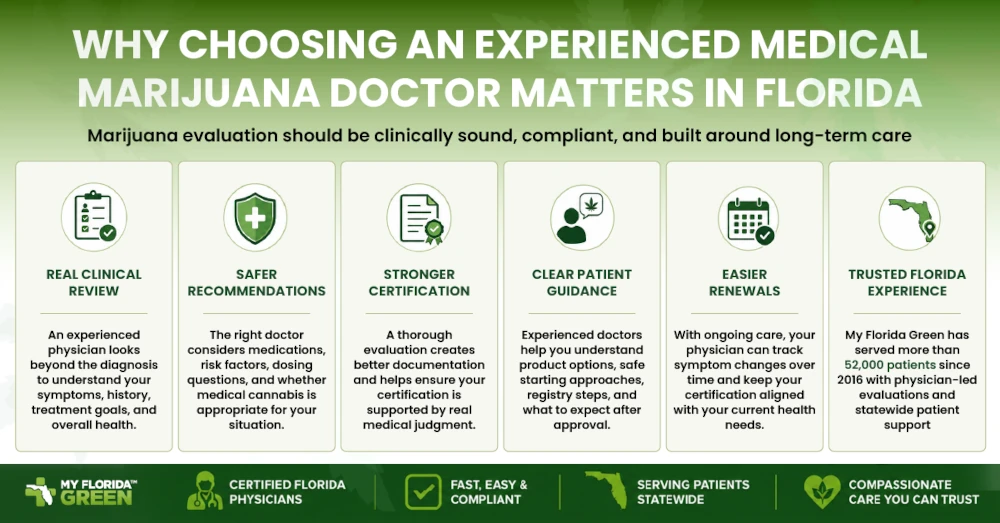
There’s a common misconception that obtaining a medical marijuana card in Florida is as simple as showing up to an appointment and walking out with a recommendation. In reality, every reputable medical marijuana doctor is conducting a careful, structured clinical assessment, one that weighs the potential benefits of cannabis treatment against a range of individual risk factors.
Florida law requires that a qualified cannabis physician certify that a patient has at least one qualifying condition for marijuana use. Experienced physicians also ensure that the medical use of marijuana outweighs the potential health risks. It means no two marijuana evaluations are identical. The role of a state-licensed cannabis physician is critical and clinical, not merely administrative.
Understanding what doctors are looking for before they issue a Florida recommendation can help you prepare for your appointment, have more productive conversations with your physician, and ultimately get a treatment plan that works for you.
What does Florida law require of certifying physicians?
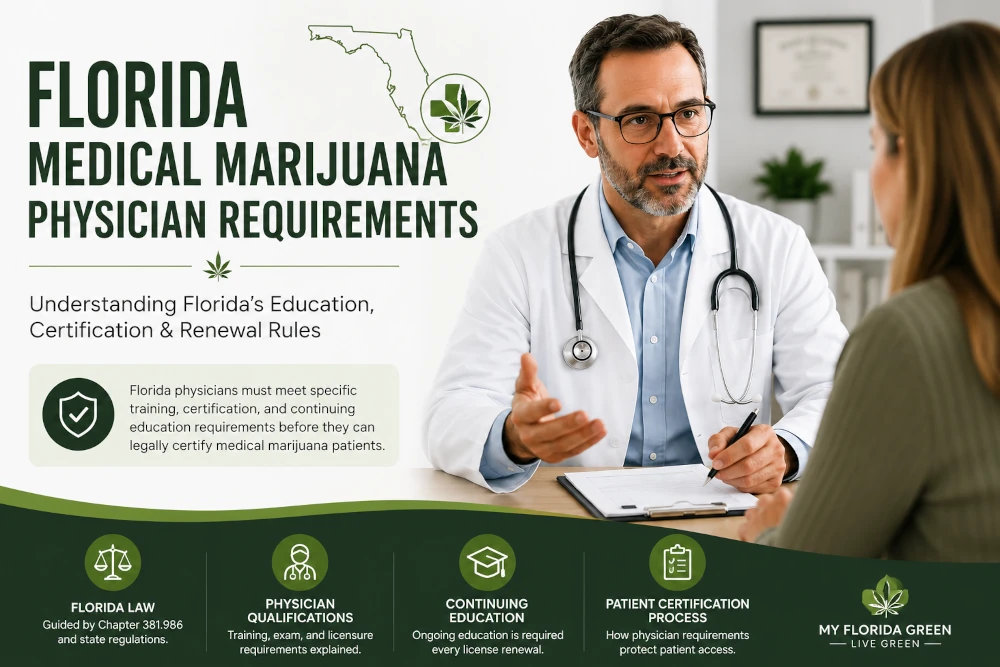
Under Florida Statute 381.986, a physician cannot simply issue a medical marijuana recommendation to anyone who asks. The law sets out specific obligations for marijuana use. The certifying physician must:
- Hold an active, unrestricted Florida medical license.
- Complete a state-mandated medical marijuana course and pass an examination.
- Conduct a thorough clinical assessment to ensure cannabis is safe for the patient.
- Diagnose the patient with at least one qualifying condition.
- Determine the risk factors to ensure cannabis does not adversely affect the patient’s health.
- Have an established ongoing patient-physician relationship.
- Develop a tailored prescription with the right strain and mode of administration.
- Register the patient in the Medical Marijuana Use Registry (MMUR) before a Florida cannabis card can be obtained.
This framework means every medical marijuana doctor in Florida is operating under genuine clinical and legal obligations.
Step One: Reviewing Your Medical History
The foundation of any cannabis evaluation is a thorough review of your medical history. A state-licensed cannabis physician will want to understand:
- Current and past diagnoses.
Your physician needs to confirm that at least one of your conditions qualifies under Florida’s list of approved qualifying conditions.
- Previous treatments and outcomes.
Review previous medications, therapies, and interventions and how well they worked.
- Surgical history.
Past surgeries, particularly for conditions involving chronic pain, nerve damage, or ongoing recovery, are evaluated carefully.
- Family health history.
Certain risk factors can impact cannabis treatment.
Step Two: Confirming a Qualifying Condition
Florida’s qualifying conditions for medical marijuana include, but are not limited to:
- Cancer
- Epilepsy
- Glaucoma
- HIV/AIDS
- Post-Traumatic Stress Disorder (PTSD)
- ALS (Amyotrophic Lateral Sclerosis)
- Crohn’s disease
- Parkinson’s disease
- Multiple Sclerosis (MS)
- Medical conditions of the same kind or class as those listed above
Patients who arrive at their marijuana evaluation with relevant medical records, prior prescription history, or specialist notes can smoothly pass the evaluation. If the licensed cannabis doctor gives a recommendation, patients can obtain their medical marijuana card with assistance from the My Florida Green team located in multiple cities across the state.
Step Three: Assessing Risk Factors
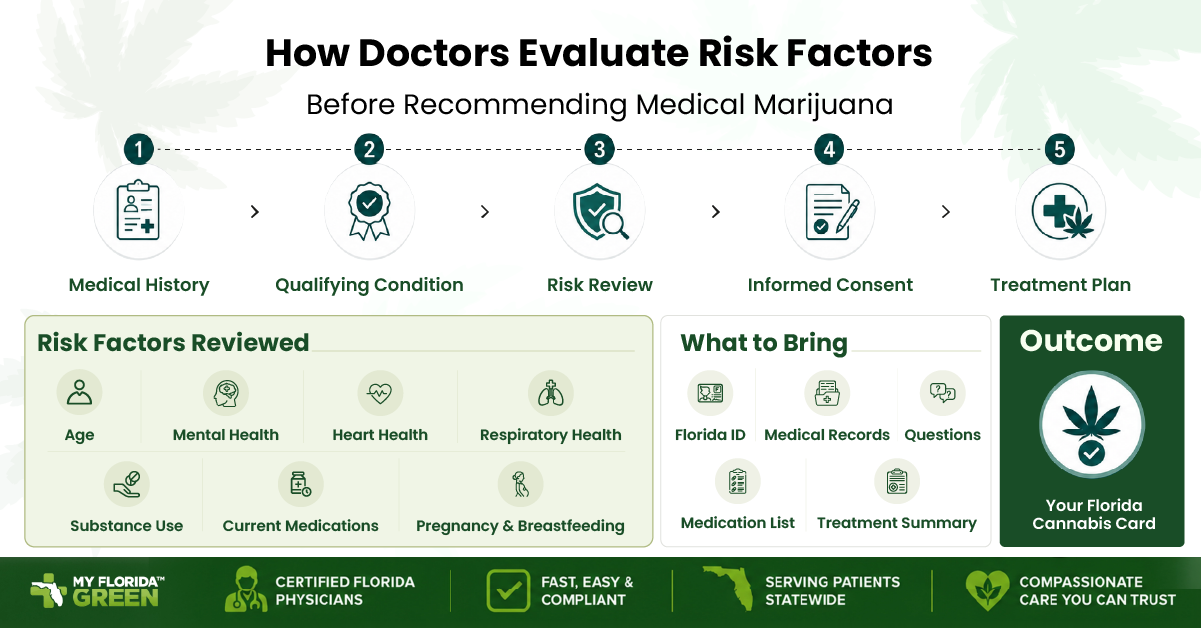
Medical marijuana evaluation should be individualized. Even patients with identical qualifying conditions may face different risk profiles, and a responsible state-licensed cannabis physician will carefully evaluate the following:
Age
Age is one of the most significant factors in a cannabis risk assessment.
- Children: For patients under 18, Florida law requires two marijuana physician certifications and parental consent to apply for a medical cannabis card. It also requires a deeper evaluation of the patient’s health condition to ensure medicinal marijuana is safe for them.
- Adults: For older patients, particularly those managing multiple conditions and taking several medications, face different considerations around dosing, cognitive effects, and drug interactions.
Mental Health History
Cannabis has a well-documented and complex relationship with mental health. It must be taken after a careful medical marijuana evaluation. Mental health conditions such as anxiety, depression, PTSD, and sleep disorders are part of the qualifying conditions for marijuana use. However, for patients with a personal or family history of psychosis, schizophrenia, or bipolar disorder, an experienced marijuana doctor will apply additional scrutiny.
Cardiovascular Health
Medicinal cannabis, particularly when inhaled, can cause a temporary increase in heart rate. For patients with controlled hypertension or mild cardiovascular conditions, physicians generally find this effect manageable and discuss it as part of informed consent. For patients with a history of heart attack, serious arrhythmias, or unstable cardiovascular disease, the physician will need to weigh these risks more carefully.
Such a condition doesn’t automatically disqualify a patient from receiving a Florida cannabis card, but it may influence the physician’s recommendations around product type, potency, and frequency of use.
Respiratory Health
For patients who smoke tobacco or have chronic obstructive pulmonary disease (COPD), asthma, or other respiratory conditions, a state-licensed cannabis physician will typically advise against smoking cannabis. Florida’s medical marijuana program allows a range of delivery methods, including oils, capsules, tinctures, edibles, and vaporizers and a good physician will tailor their recommendation accordingly.
Substance Use History
A history of substance use disorder is a risk factor that a responsible cannabis physician has to assess carefully before recommending a Florida cannabis card. A physician evaluating a patient with a substance use history will typically conduct a more detailed conversation about consumption patterns, motivations for use, and support systems. They will be conservative when recommending marijuana products, especially THC.
Pregnancy and Breastfeeding
Medical marijuana is not recommended during pregnancy or breastfeeding. Florida physicians will ask about current or planned pregnancy. The standard of care is to advise against any kind of cannabis use during this period due to potential impacts on fetal development and infant health.
Current Medications and Drug Interactions
Cannabis, particularly CBD, is metabolized in the liver, the same pathway used by many common medications. This means cannabis can affect the blood levels of certain drugs, including blood thinners like warfarin, some antiepileptic medications, and certain immunosuppressants.
Your medical marijuana doctor should review your full current medication list to ensure medicinal cannabis will not interfere with the treatment.
Step Four: The Informed Consent Conversation
A critical but sometimes overlooked part of the marijuana evaluation process is informed consent. A state-licensed cannabis physician will ensure every user understands all the risks before recommending them for a Florida cannabis card.
- The potential benefits and risks of medical cannabis.
- The different product types, delivery methods, and available cannabinoid profiles.
- The importance of starting with low doses and titrating up gradually.
- The legal framework of the Florida medical marijuana program.
- Legal limits of a medical marijuana card.
- What to do if you experience adverse effects.
Step Five: Developing a Personalized Treatment Recommendation
Once the physician has completed their assessment, they add their recommendation to the Florida Medical Marijuana Use Registry. Experienced cannabis physicians not only certify that the patient has a qualifying condition for marijuana use, but they also provide guidance on:
- Choosing appropriate cannabis delivery methods
- Cannabis strain recommendation tailored to the patient’s needs.
- Initial dosing guidance
- List of risk factors and adverse effects to look for.
What This Means for Your Appointment at My Florida Green
At My Florida Green, every marijuana evaluation is conducted by a state-licensed cannabis physician following a structured, patient-centered approach. The goal is more than recommending a Florida cannabis card. It is to make sure every patient leaves with a clinically appropriate recommendation, legally sound, and genuinely useful for managing their condition.
To get the most out of your evaluation, come prepared with:
- A valid Florida ID or driver’s license.
- Documentation of your qualifying condition.
- A complete list of your current medications.
- A clear summary of treatments you’ve already tried and their outcomes.
- Any questions you have about product types, dosing, or the Florida cannabis card application process.
My Florida Green offers convenient marijuana evaluation appointments across Florida. Their state-licensed cannabis physicians have experience evaluating a wide range of qualifying conditions for marijuana use and helping patients navigate the registration process. They ensure that all qualified patients can obtain a medical marijuana card without any unnecessary delay.

Summary
Patients who go through a thorough marijuana evaluation often come away with a much clearer understanding of which cannabis products are likely to help them, how to use them responsibly, and what to watch out for.
The path to a Florida cannabis card runs through a genuine medical evaluation, one that takes your health history, qualifying conditions, current medications, and personal risk factors seriously. Understanding what a state-licensed cannabis physician is looking for before recommending medical marijuana can help you prepare, participate more meaningfully in your care, and ultimately benefit more fully from the treatment.
If you have a qualifying condition and want to explore whether medical marijuana is right for you, My Florida Green’s team of experienced medical marijuana doctors is ready to help. Book your marijuana evaluation today and take the first step toward a personalized, physician-guided cannabis treatment plan.
Frequently Asked Questions – FAQs
- What does a medical marijuana doctor look for during a Florida cannabis card evaluation?
A medical marijuana doctor reviews your medical history, qualifying condition, current medications, previous treatments, and individual risk factors before recommending a Florida cannabis card. The goal is to ensure that medical marijuana is clinically appropriate, safe, and legally compliant for your condition.
- What qualifying conditions are accepted for medical marijuana in Florida?
Florida qualifying conditions for medical marijuana include cancer, epilepsy, glaucoma, HIV/AIDS, PTSD, ALS, Crohn’s disease, Parkinson’s disease, multiple sclerosis, and other medical conditions of the same kind or class. A state-licensed cannabis physician will confirm whether your diagnosis meets Florida’s medical marijuana requirements.
- How can I prepare for my marijuana evaluation in Florida?
To prepare for your marijuana evaluation, bring a valid Florida ID, documentation of your qualifying condition, a list of current medications, previous treatment history, and any questions about cannabis products, dosing, or the Florida medical marijuana card process. When you are prepared, your cannabis physician can create a more personalized treatment recommendation.
About the Author
Dr. Tazeen T. Zaidi (MD) is a board-certified family physician based in Sanford, FL, with over 30 years of experience. She has been associated with providing medical marijuana evaluations as part of her practice in Florida. Dr. Zaidi is double certified in Medical Marijuana Medicine by the Society of Cannabis Clinicians and the American Academy of Cannabis Medicine. She has practiced for over 20 years and is dedicated to helping patients access safe and effective medical cannabis treatment.
Medical Disclaimer
The information provided in this video and/or article is for educational and informational purposes only and is not intended as medical advice. It should not be used as a substitute for professional medical diagnosis, treatment, or guidance from a qualified healthcare provider.
Always seek the advice of your physician or other licensed healthcare professional regarding any medical condition or treatment options. Never disregard professional medical advice or delay seeking care because of something you have read or viewed here.
Medical services, evaluations, certifications, and treatment recommendations are provided only after an individualized assessment by a licensed physician and are subject to applicable state laws and regulations.
If you experience a medical emergency, call 911 or contact your healthcare provider immediately.