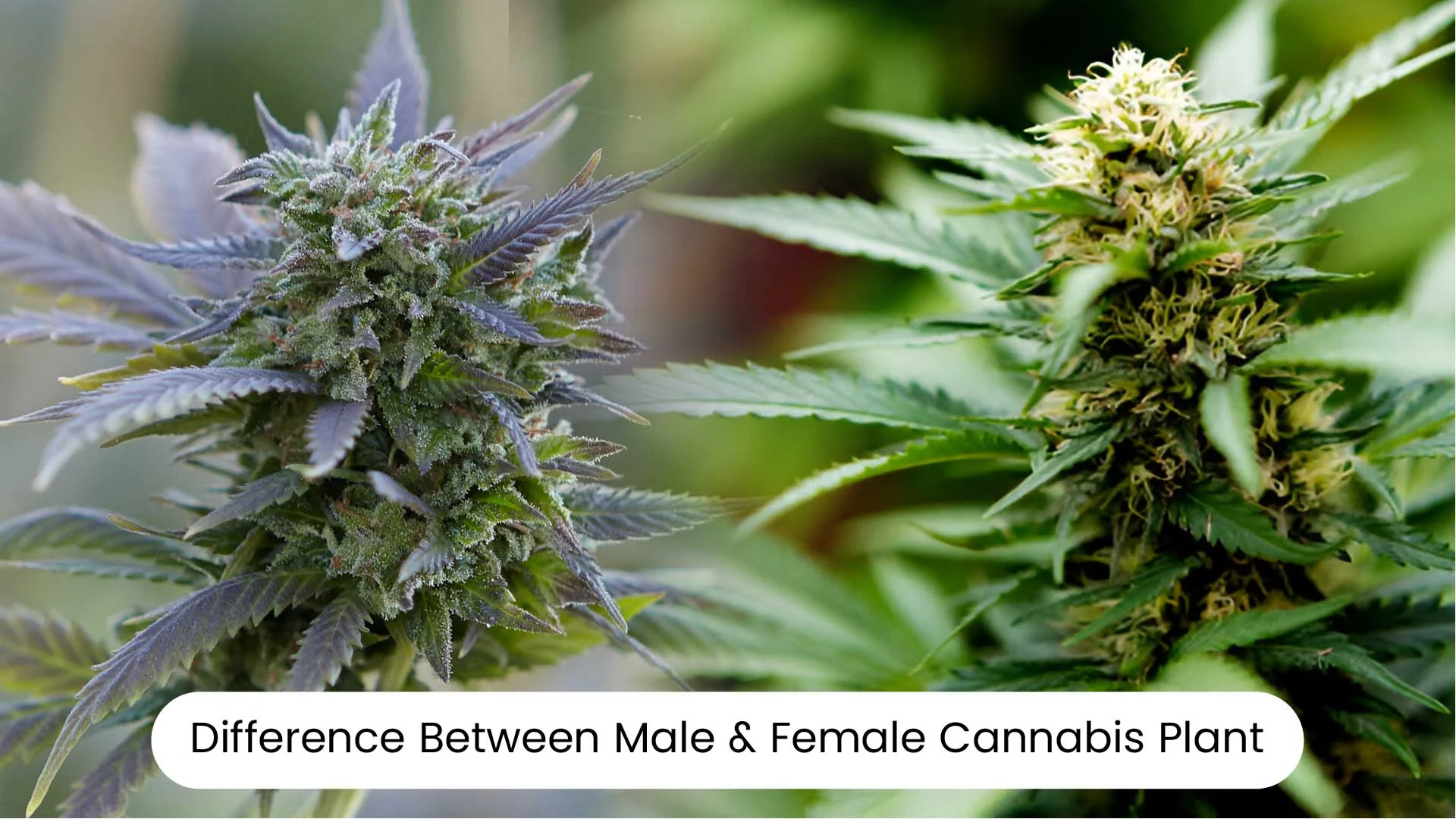
Cannabis are dioecious plants. It means that they have separate male and female plants. Among the two, female cannabis plants are weed growers’ favorite. Discrimination among flowers, too?
Let us explain why it is so.
Female marijuana plants have high cannabinoid content (THC or CBD) and terpenes and produce high-quality consumable flowers that make them the star of the show.
These flowers are later processed into products commonly available at medical marijuana dispensaries for registered patients.
It might have sparked curiosity among many to know the difference between a male and a female cannabis plant and how to identify them.
This article will explore male cannabis plants vs. females and answer all your burning questions related to the two.
What happens if you don’t separate a male cannabis plant from a female plant?
Before we jump into how you can tell which one is female and which one is male weed plant, let’s discuss why it is important to separate the two and what happens if you don’t.
If you don’t separate the male and female cannabis plants, the reproduction process starts between the two after they reach sexual maturity. But what is undesirable is the effect of fertilization between the two.
Weed growers don’t want male plants to fertilize the female ones because doing so results in the creation of unwanted seeded buds that have less potency and are not suitable for consumption.
Male Cannabis Plant vs. Female: How to tell if a cannabis plant is male or female?
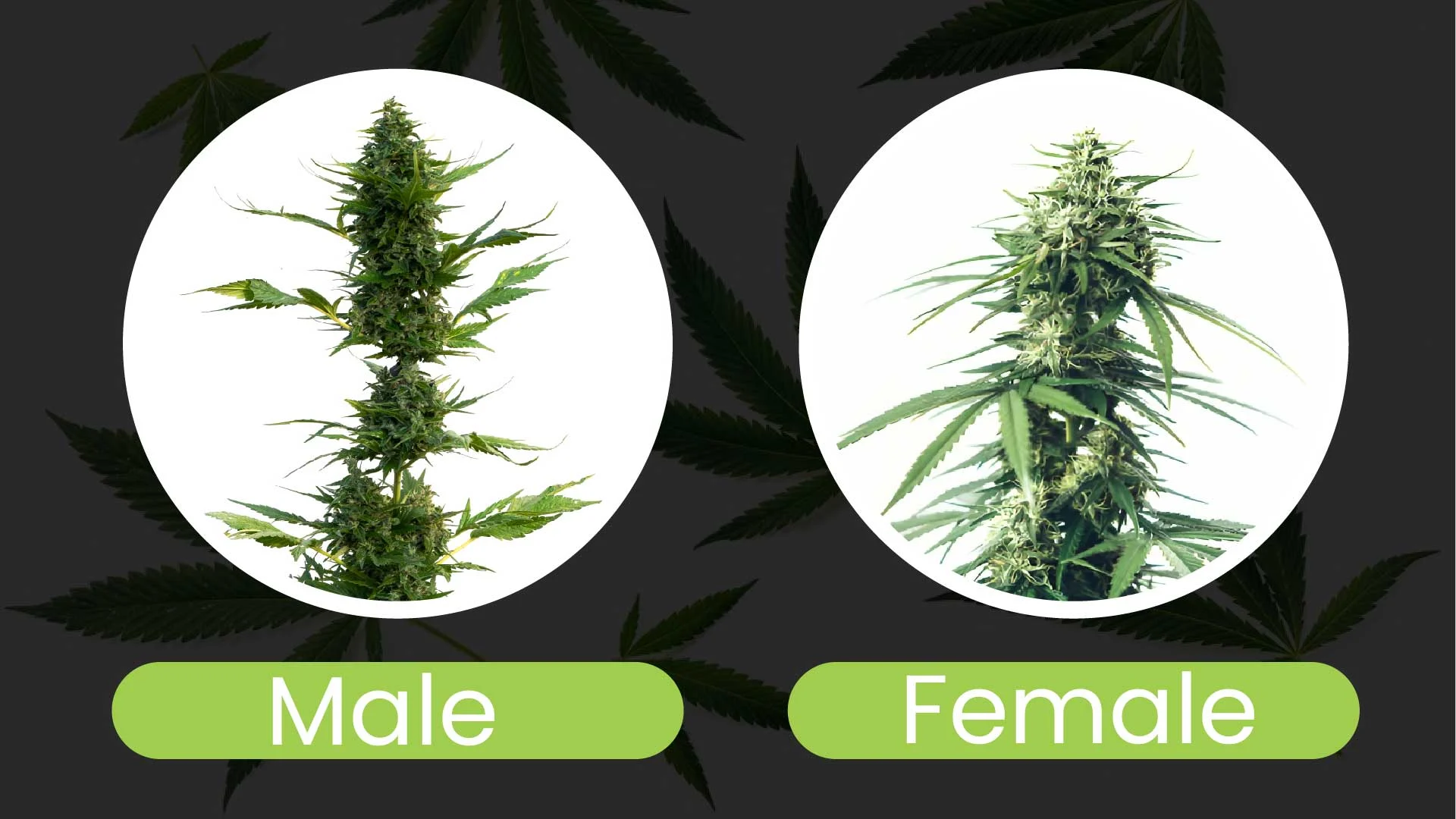
The earliest you can tell whether the cannabis plant is male or female is by looking at its “pre-flowers.”
Male pre-flowers look like small, egg-shaped sacs and show up about 3-4 weeks after germination. Contrary to male pre-flowers, Female pre-flowers appear a bit later. They take around 4-6 weeks to show up after germination and look like small V-shaped structures with pistils (white hair).
The differences start to become more visible as both plants fully flower. Male plants look like small, bell-shaped flowers that contain pollen sacs, while female weed plants look like dense, resinous buds with large calyxes and pistils.
Male plants have thicker, sturdier stalks and fewer leaves compared to female plants of the same strain.
Another difference between the two is that male plants tend to grow taller, while female plants grow wider.
The purpose they serve is another factor that distinguishes between a male and female cannabis plant. Male plants are used for breeding and pest control, while female marijuana plants are best for consumption.
Summary of the Difference Between a Male and Female Cannabis Plant
Here is a summary explaining the core differences and helping you tell male from female cannabis plants:
| Male Cannabis Plant vs. Female | ||
| Characteristics | Male Marijuana Plants | Female Marijuana Plants |
| Pre-flowers | Small sacs (pollen-producing) | Pistils (white hair-like structures) |
| Appearance | Fewer leaves and taller | Shorter and more bushier |
| Bud Production | No buds production | Produces buds, often rich in THC/CBD |
| Trichomes | Few or none | Have many trichomes on buds |
| Pollen | Produces pollen for fertilization | Does not produce pollen |
| Purpose | Breeding | Produces consumable flowers |
What can I do with a male cannabis plant?
If you identify a male cannabis plant in your garden, don’t throw it away. They are more useful than you think.
Undoubtedly, they have fewer cannabinoids and terpenes than female weed plants; however, you can use male cannabis plants for:
- Breeding
- Soil enrichment
- Create hemp fiber
- Making edibles at home
When it comes to homemade edibles, expiration is a major concern. It is important to know the consequences of eating expired edible gummies and the tips to improve their shelf-life.
Can female cannabis plants produce seeds without male plants?
Normally, female cannabis plants require male pollen to start producing seeds. However, female plants can also produce seeds on their own. Here is how it occurs:
It happens when a female plant develops male pollen sacs due to environmental factors. This process is called hermaphroditism.
In this phenomenon, pollen sacs release pollen, and female pistils carry them and self-pollinate to produce seeds.
Conclusion
As we wrap up, it’s clear that there are several differences between female and male cannabis plants that help identify both. The difference is in their physical appearance as well as the purpose for which they are suitable. Apart from that, we have learned about why cannabis growers separate male and female plants and whether female plants can produce seeds.
Still Have Questions?
If you have any other questions about the types of cannabis plants or want to know about health conditions or where to get medical marijuana in Florida, simply get in touch with My Florida Green.
We’re available in multiple locations across Florida, including Naples, Fort Myers, Hialeah, Melbourne, St. Petersburg, Sarasota, and Jacksonville.