Which health issues qualify someone for medical cannabis in Naples and across Florida is the first question most patients ask — and the first step toward finding relief. This guide walks through the conditions the state recognizes, how Naples medical marijuana doctors assess patients, and the clinical reasoning behind cannabis treatment — including key cannabinoids, the endocannabinoid system, and condition-specific benefits. You’ll also get clear, practical steps for applying and renewing a Florida medical marijuana card, how to find certified doctors and dispensaries in Naples, and answers to common eligibility and cost questions. Content reflects research and practice as of 06/2024 and explains how local support services can simplify the certification process for patients.
What Are the Florida Medical Marijuana Qualifying Conditions?

Florida recognizes a group of core conditions and allows physicians to certify comparable debilitating conditions when appropriate. The law focuses on chronic or severe problems that significantly affect daily life — a framework that helps doctors in Naples document medical need and decide whether cannabis is a reasonable option. Knowing which conditions fall inside this scope makes it easier for patients to prepare the medical records doctors typically ask for during certification. Below we list the core qualifying diagnoses and describe the additional, comparable conditions physicians commonly consider.
Which Core Conditions Qualify for Medical Marijuana in Naples?
Core qualifying conditions are major diagnoses that often lead patients to try cannabis for symptom control and better quality of life. Examples include cancer-related symptoms and epilepsy with treatment-resistant seizures. Clinical experience and studies support cannabinoid use for symptoms such as chemotherapy-related nausea and certain seizure disorders: CBD has shown benefit in reducing seizures in specific syndromes, and THC-containing products can relieve refractory nausea and pain in some cancer patients. Knowing how these diagnoses map to individualized treatment helps patients gather the records and symptom histories Naples doctors will review.
- Core conditions are typically severe or treatment-resistant illnesses that impair daily function.
- Cancer patients often use cannabis for symptom relief when standard treatments fall short.
- Epilepsy candidates usually have documented, refractory seizures despite conventional therapy.
Because these conditions require detailed documentation, physicians commonly request medical histories and prior treatment records before certifying — a point we expand on in the certification section.
What Comparable Debilitating Conditions Are Recognized in Florida?
Florida law also allows doctors to certify “comparable debilitating conditions” — chronic or persistent problems that produce similar functional impairment to the core diagnoses. This category covers common reasons patients seek cannabis in Naples, such as chronic pain and post-traumatic stress disorder (PTSD). For chronic pain, clinicians evaluate the severity, duration, and previous treatments; with PTSD, doctors weigh symptom patterns like nightmares and hyperarousal against the risks and available evidence. The decision rests on clinical judgment and a careful review of each patient’s history.
- Comparable conditions are chronic problems that significantly limit daily life.
- Physicians review prior treatments, symptom severity, and functional impact before certifying.
- This category allows individualized clinical judgment to guide cannabis therapy decisions.
Strong documentation and a clear record of prior therapies improve the chances of a successful certification — we cover evaluation steps next.
How Do Naples Medical Marijuana Doctors Evaluate and Certify Patients?
Naples medical marijuana doctors use a structured clinical assessment to document qualifying diagnoses, review past treatments, and determine whether medical cannabis is an appropriate option for a patient’s symptoms. The visit centers on medical records, symptom timeline, current medications, and any contraindications to build a risk–benefit picture that supports the physician’s decision. During the consult, doctors assess how symptoms affect daily life, explain expected outcomes, review dosing basics, and outline monitoring plans. The following sections break down the certification steps and describe how patient support services help along the way.
What Is the Certification Process with Certified Doctors in Naples?
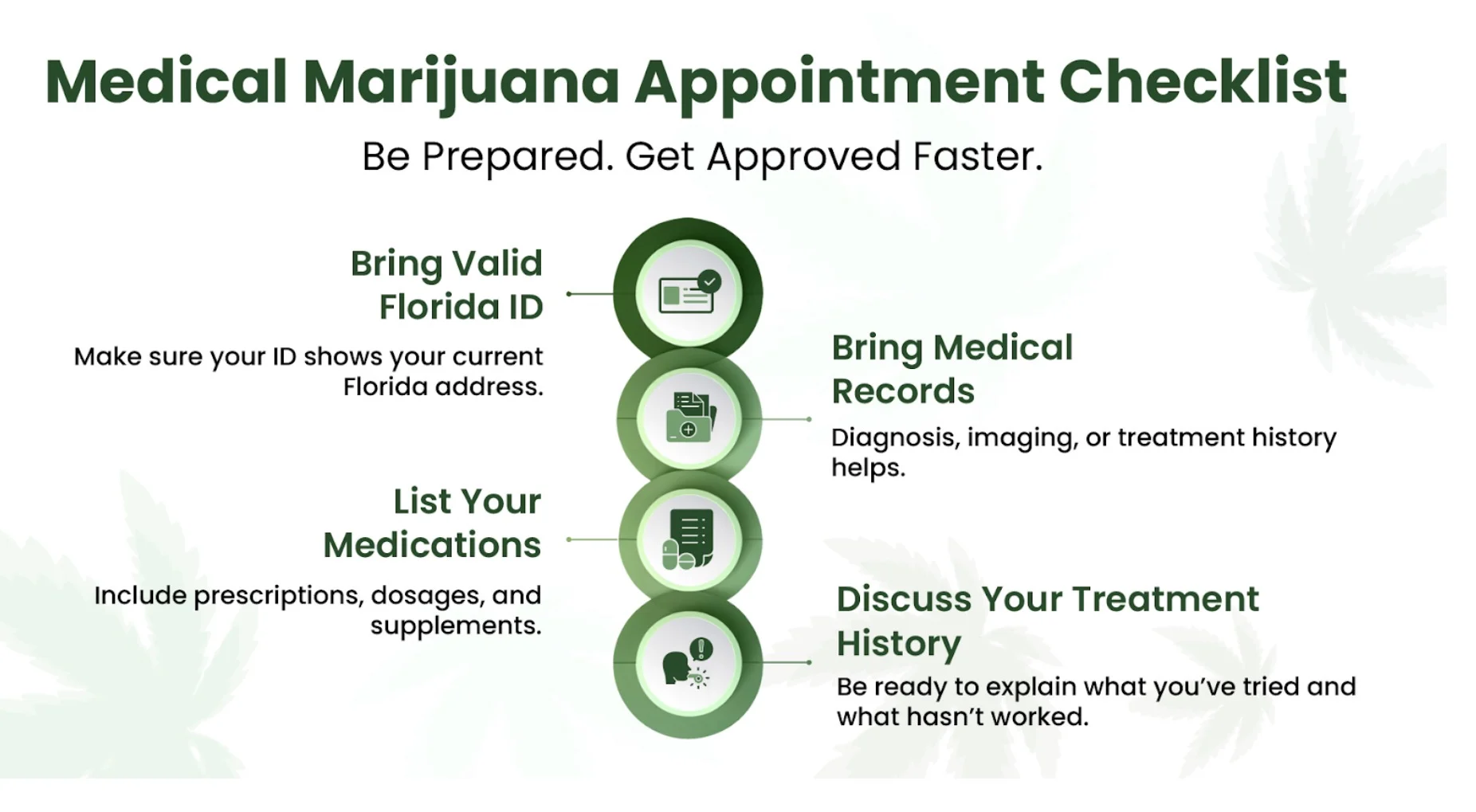
The certification process usually begins with an initial consultation where the physician documents the qualifying condition and reviews relevant medical records to confirm prior treatments and functional impairment. After weighing risks and benefits, the doctor issues a physician certification if the patient meets Florida’s criteria — that certification is required to register with the state. Physicians also describe follow-up care, monitoring, and potential medication interactions. To streamline the visit, patients should bring clear medical records and a concise timeline of symptoms and treatments.
- Prepare records: Collect diagnoses, treatment notes, imaging or test results, and medication lists.
- Initial consult: Physician reviews history, symptom impact, and prior therapies.
- Certification decision: Doctor issues certification if criteria are met and explains next steps.
Clear documentation shortens the evaluation and reduces delays. The next section explains how My Florida Green supports patients through this process.
How Does My Florida Green Support Patients Through Certification?
My Florida Green offers patient-centered support that complements clinical care by guiding people through paperwork, clarifying eligibility, and connecting them with certified physicians. We focus on education and practical assistance so Naples patients can prepare for appointments and understand the state process. My Florida Green does not replace a physician’s judgment — instead, we help you gather documentation, find qualified providers, and access educational resources that make certification smoother. With this support, patients often approach doctor visits better prepared and with more realistic expectations about treatment pathways.
- My Florida Green provides clear, patient-focused education and administrative guidance.
- We connect patients with certified doctors and explain necessary documentation.
- Our support helps patients present a complete medical history during evaluations.
Those coordinated services reduce administrative hurdles and lead into an overview of how cannabis pharmacology informs treatment choices.
How Does Medical Marijuana Help Treat Qualifying Conditions?
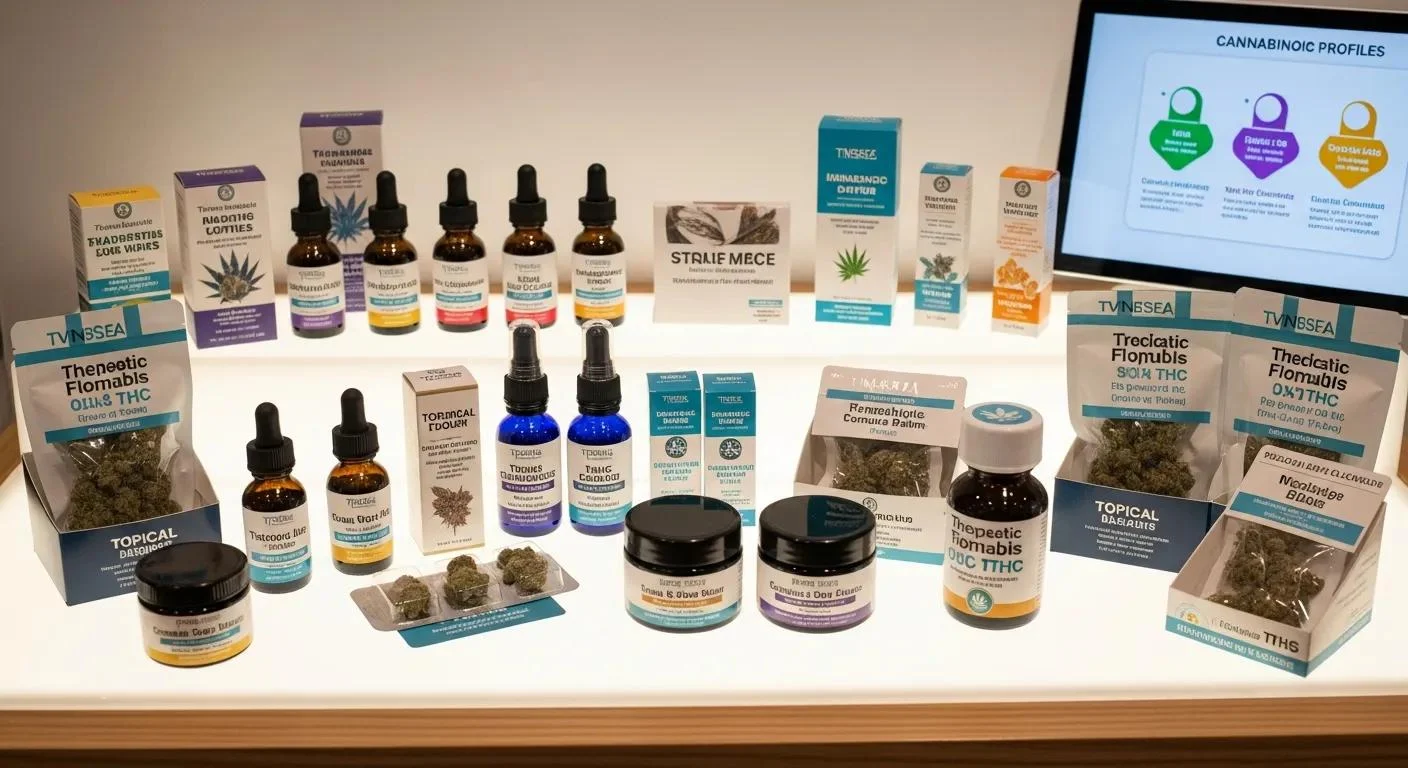
Medical marijuana works through cannabinoids — the active plant compounds — and the body’s endocannabinoid system to relieve symptoms via anti-inflammatory, analgesic, antiemetic, and neuromodulatory effects. THC and CBD interact differently with receptors and other targets, changing pain perception, reducing inflammation, and influencing neural activity. Clinicians match cannabinoid profiles, doses, and delivery methods to each patient’s needs, balancing potential benefits against side effects and Florida’s legal framework. Below we summarize how key cannabinoids work and outline condition-specific benefits.
Different cannabinoids and formulations produce distinct effects; clinicians choose options that best fit a patient’s symptoms and goals.
| Entity | Attribute | Value |
| THC (tetrahydrocannabinol) | Primary psychoactive cannabinoid | Analgesic, antiemetic, appetite stimulation; psychoactive effects require monitoring |
| CBD (cannabidiol) | Non-intoxicating cannabinoid | Anticonvulsant and anxiolytic properties; shown to reduce seizures in specific syndromes and modulate inflammation |
| Balanced THC:CBD formulations | Combined cannabinoid profiles | Offer symptom control with moderated psychoactivity and complementary analgesic effects |
What Is the Role of Cannabinoids and the Endocannabinoid System in Treatment?
Cannabinoids act on the endocannabinoid system — a regulatory network of CB1 and CB2 receptors, natural ligands, and enzymes — to influence pain signals, immune responses, and neurotransmission. THC is a partial CB1 agonist and can relieve pain while causing psychoactive effects; CBD works indirectly on those receptors and other pathways to offer anticonvulsant and calming effects. These interactions explain clinical benefits for pain, spasticity, nausea, and some seizure disorders, and they guide clinicians when selecting formulations and doses. Understanding these mechanisms helps ensure safer, evidence-informed care.
- Cannabinoids affect pain, inflammation, and neural excitability through CB1/CB2 pathways.
- THC and CBD interact differently with receptors, creating distinct therapeutic profiles.
- Mechanistic knowledge helps clinicians select the best formulation for each symptom.
Those principles lead into a condition-by-condition look at what patients can expect.
What Are the Benefits of Medical Cannabis for Specific Conditions?
Medical cannabis can reduce symptoms across several qualifying conditions: it may lessen chronic pain, control chemotherapy-related nausea and vomiting, and lower seizure frequency in certain refractory epilepsy syndromes. For chronic pain, cannabinoids can be an alternative when standard treatments fail or cause intolerable side effects; research shows modest but meaningful pain reduction for some patients. In oncology care, THC-containing products can ease persistent nausea and improve appetite, helping patients tolerate treatment. Clinicians balance these benefits with possible side effects and individual health factors when recommending therapy.
- Chronic pain relief: Cannabinoids can reduce pain perception and improve daily function for some patients.
- Antiemetic effects: THC formulations can control difficult chemotherapy-related nausea.
- Seizure reduction: CBD is effective in lowering seizures for certain pediatric and adult refractory epilepsy syndromes.
| Entity | Attribute | Value |
| Chronic Pain | Primary therapeutic target | Symptom reduction and improved function with monitored cannabinoid regimens |
| Chemotherapy-Related Symptoms | Clinical application | Nausea relief and appetite stimulation with THC-containing options |
| Refractory Epilepsy | Evidence-based use | CBD-based treatments can reduce seizure frequency in select syndromes |
Knowing what to expect helps patients form realistic goals and prepares them for the application and maintenance steps described next.
What Are the Steps to Get and Renew a Medical Marijuana Card in Naples, Florida?
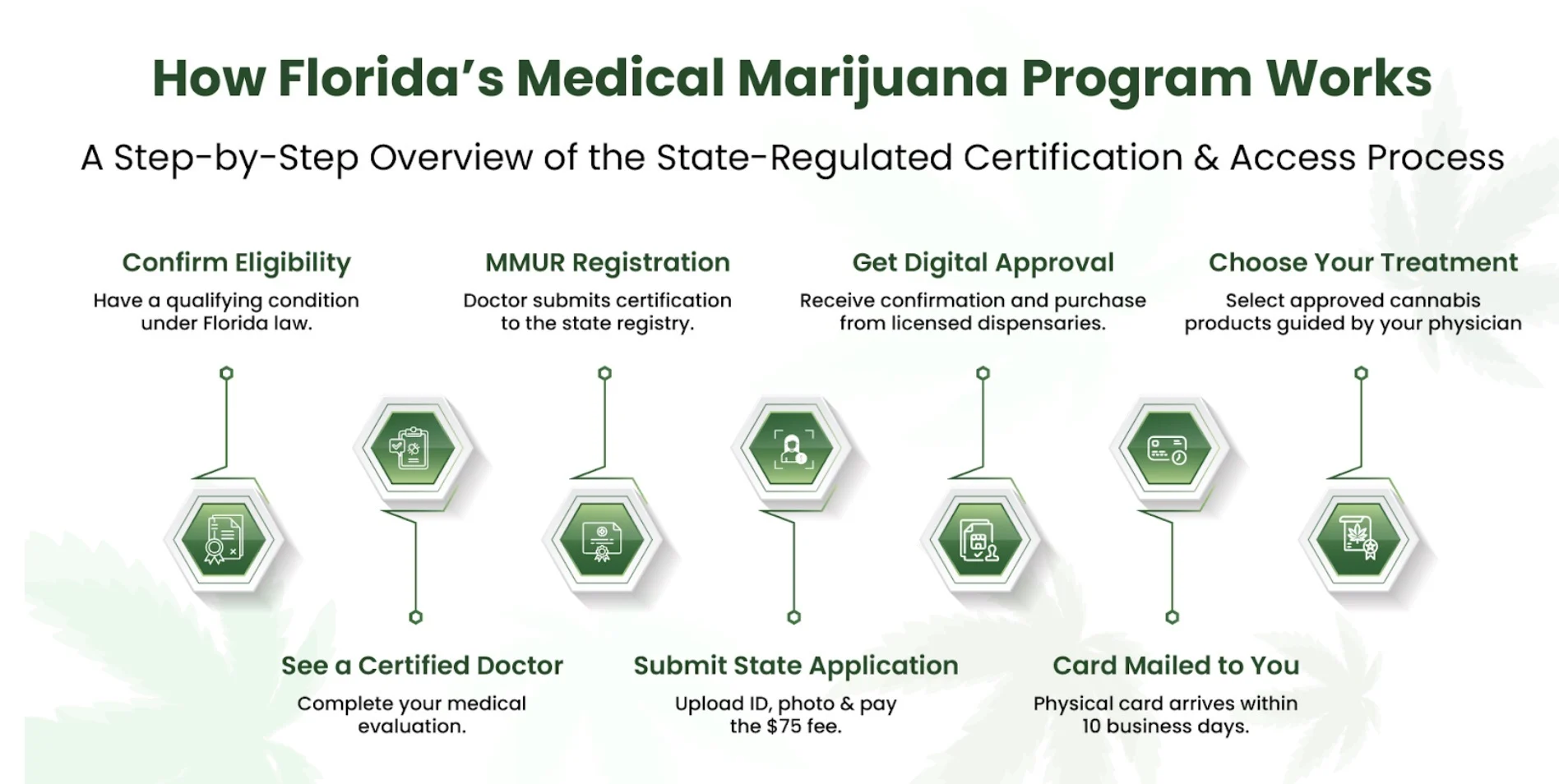
Getting and renewing a Florida medical marijuana card requires a physician’s certification, completing state registration, and following renewal timelines. Naples patients should gather medical records, complete the doctor visit, and follow state instructions to secure card privileges. Renewals need a follow-up evaluation and an updated certification before the current card expires. Being prepared with the right documentation reduces delays and helps maintain uninterrupted access to therapy.
How Do You Apply for a Medical Marijuana Card in Florida?
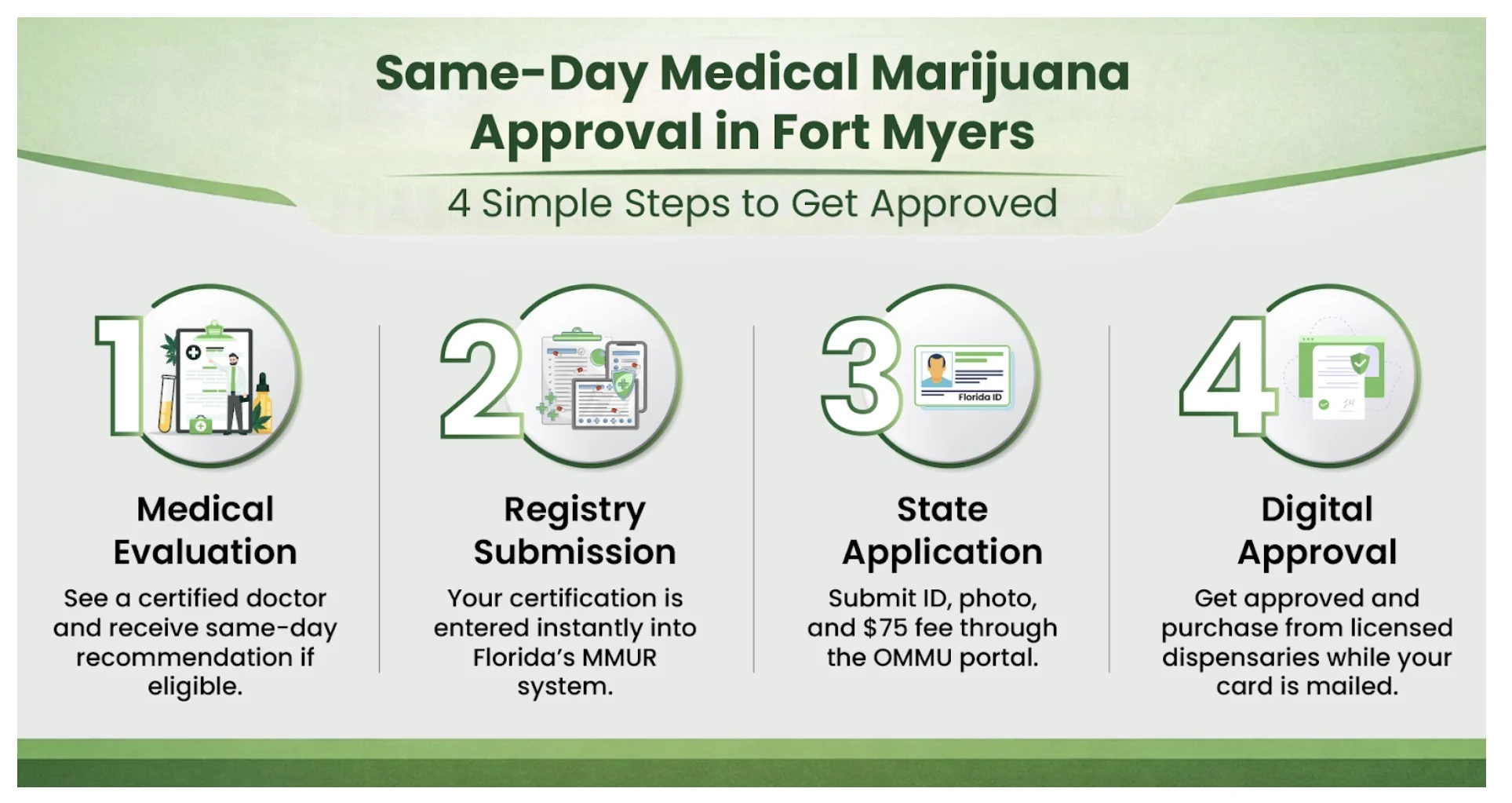
To apply, you need a physician-issued certification for a qualifying condition and then must register with Florida’s medical marijuana program. That registration includes identity verification and payment of state fees. Bring medical records that support the diagnosis and any history of prior treatments so the physician can make an informed decision. After your doctor submits the certification, complete the state registration to receive approval and access licensed dispensaries.
- Prepare a concise medical summary and supporting documentation.
- Complete the physician consultation and obtain certification.
- Register with the state program to receive approval and access to dispensaries.
These steps help applicants plan their visit and paperwork; renewal details follow.
Can You Renew Your Medical Marijuana Card Online in Naples?
Renewal requires a follow-up visit with a certified physician to confirm continued medical appropriateness, but many patients complete the administrative portion — submitting documentation and paying fees — online through the state portal after the doctor issues an updated certification. Schedule your reassessment well before your card expires and verify current renewal procedures so you don’t experience service gaps.
- Schedule follow-up: Book a reassessment before your card expires.
- Obtain new certification: Doctor documents continued eligibility and care plans.
- Complete state renewal steps: Submit updated paperwork and fees through the state registry.
| Entity | Attribute | Value |
| Initial Application | Required components | Physician certification, medical records, identity verification, state fee |
| Renewal | Required components | Follow-up physician evaluation, updated certification, state renewal submission |
| Typical Timeframe | Administrative duration | Physician visit plus state processing time; plan ahead to avoid gaps |
Where Can You Find Certified Medical Marijuana Doctors and Dispensaries in Naples?
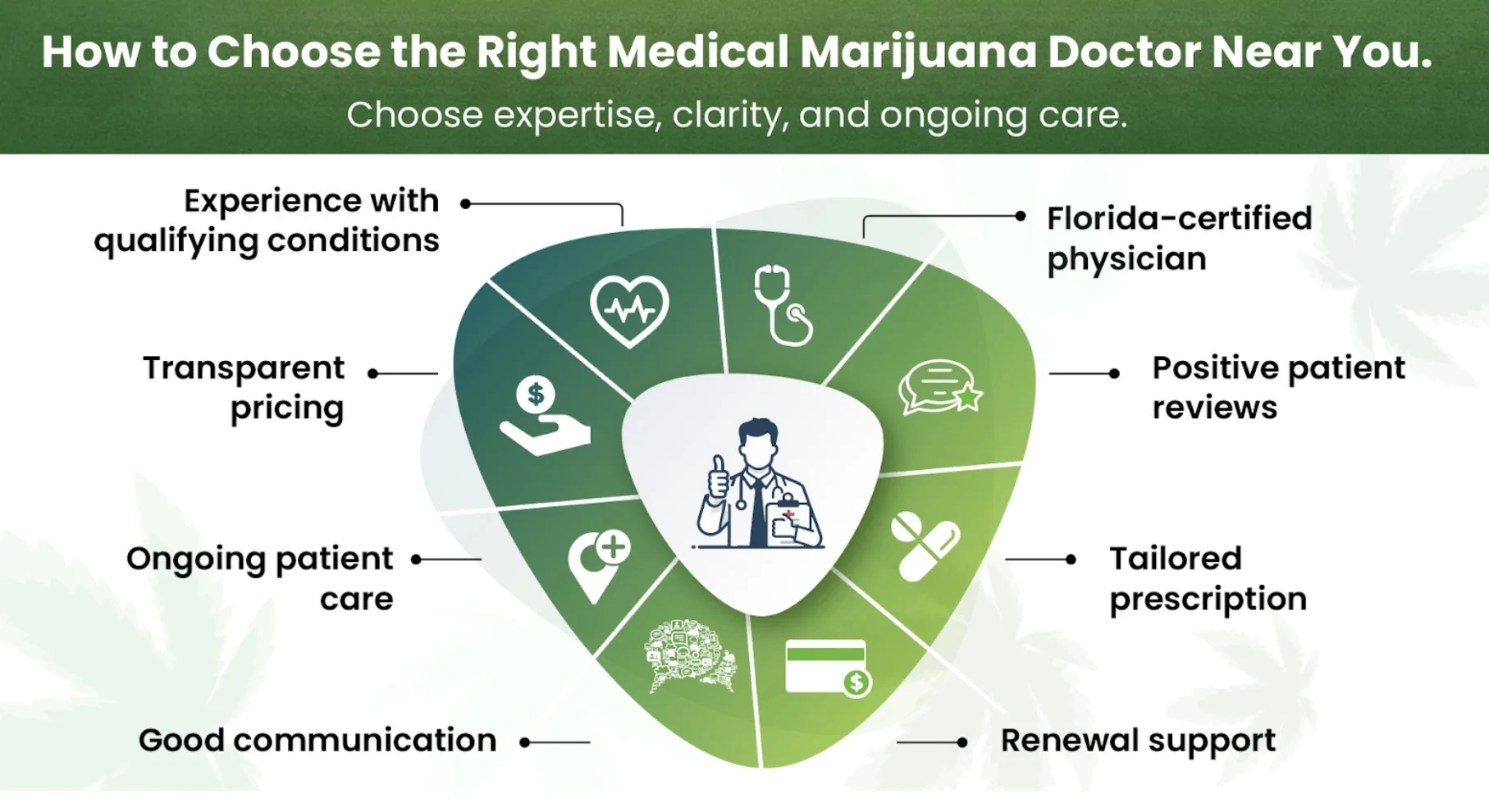
Local certified medical marijuana doctors and licensed dispensaries are where patients complete evaluations, receive certifications, and obtain regulated cannabis products. Look for physicians with experience treating your condition and dispensaries that provide clear product details and patient-focused guidance. Online directories and patient support services can help you find Naples providers so you can pair clinical advice with the right product choices.
Who Are the Licensed Medical Marijuana Doctors in Naples?
Licensed medical marijuana doctors in Naples are physicians authorized to evaluate qualifying conditions and issue certifications. They review medical histories, perform clinical assessments, and document treatment plans in line with Florida rules. While specific names and addresses aren’t listed here, seek clinicians who understand your condition, explain cannabinoid options and dosing, and coordinate care with your primary provider.
- Choose physicians who document treatment history thoroughly and discuss risks and benefits.
- Look for clinicians experienced with your specific condition and treatment options.
- Confirm the provider explains monitoring, potential interactions, and follow-up expectations.
This approach helps patients match clinical expertise to their needs and prepares them to select appropriate dispensary products.
What Dispensaries Serve Naples Patients and What Products Are Available?
Dispensaries serving Naples usually carry a range of product classes — flower, vaporizable oils, tinctures, capsules, topicals, and concentrates — each with different onset and duration characteristics to suit symptom management. Choose products based on cannabinoid profiles (THC-dominant, CBD-dominant, or balanced), delivery method, and clear lab testing. Dispensary staff can guide potency, onset times, and recommended starting doses for conditions like pain, nausea, or spasticity.
- Flower and vaporizable products: Faster onset for acute relief.
- Tinctures and oils: Flexible dosing for gradual titration and sustained effects.
- Topicals and transdermals: Localized relief with limited systemic exposure.
| Entity | Attribute | Value |
| Product Classes | Examples | Flower, tinctures, capsules, topicals, concentrates |
| Cannabinoid Profiles | Examples | THC-dominant, CBD-dominant, balanced THC:CBD |
| Patient Guidance | Dispensary role | Explain dosing, onset, lab testing, and product selection |
With physician guidance, choosing the right product and profile reduces trial-and-error and improves the chance of a good outcome.
What Are Common Questions About Medical Marijuana Eligibility and Treatment in Naples?
Common patient questions include which conditions qualify, what documentation is needed, and what certification and state fees apply. Clear answers help you prepare for the clinical visit and anticipate costs. Physicians assess documented qualifying conditions, review prior therapies, and consider contraindications; the state handles registration and card issuance. Below are practical responses to the most frequent eligibility and cost questions.
What Conditions Qualify for a Medical Marijuana Card in Florida?
Qualifying conditions include both the core diagnoses listed under state law and comparable debilitating conditions a treating physician identifies — examples are cancer, epilepsy, chronic pain, and PTSD when they cause significant impairment or don’t respond to standard care. Physicians use clinical judgment based on medical records, prior treatments, and current symptom burden. Providing clear records, objective findings, and a treatment timeline makes certification evaluations smoother.
- Qualifying conditions include both core and comparable debilitating diagnoses.
- Physician judgment, backed by medical records, determines eligibility.
- Clear documentation of prior treatments strengthens certification applications.
Next, we cover cost considerations.
How Much Does Certification Cost and What Are the Fees?
Costs include the physician consultation fee and the state registration fee; exact amounts vary by provider and over time, so confirm fees before you book. The physician visit documents eligibility and may result in certification; the state charges an administrative fee to process your card. Additional costs include product purchases and any follow-up visits. Preparing records in advance and using patient support services can reduce repeat visits and speed processing, helping control overall expenses.
- Physician consultation: Fees vary by provider for the evaluation and certification.
- State registration: Administrative fee required by the state medical marijuana program.
- Ongoing costs: Product purchases and follow-up care are additional expenses to plan for.
That completes our practical overview of eligibility and treatment pathways in Naples.
Frequently Asked Questions
How do I find a certified medical marijuana doctor in Naples?
Start with online directories and local health resources that list licensed physicians, or use patient support services that connect you with Naples providers. Look for doctors with experience treating your condition and who clearly explain treatment options. Ask about how they document medical history and what follow-up care they recommend.
Are there age limits to get a medical marijuana card in Florida?
Yes. You must be 18 or older to apply for your own card. Minors with qualifying conditions can be eligible, but a legal guardian must apply and be registered with the state program to manage the minor’s care and purchases.
What should I expect during my first consultation with a medical marijuana doctor?
Expect a thorough review of your medical history, current symptoms, and prior treatments. The doctor will assess whether cannabis is an appropriate option, discuss potential benefits and risks, and explain the certification process and required documentation. The visit helps establish a personalized treatment plan if you qualify.
How long does it take to get a medical marijuana card after I apply?
Processing times vary. After your physician submits certification, state approval can take from a few days to several weeks depending on application volume and whether all documentation is complete. Submitting accurate, complete information reduces delays.
Can I use a Florida medical marijuana card in other states?
Florida’s card is not universally accepted elsewhere. Some states allow limited reciprocity for out-of-state patients, but Florida generally does not have broad reciprocity agreements. Check the laws of any state you plan to visit before traveling with medical cannabis.
What side effects should I expect from medical marijuana?
Side effects can include dizziness, dry mouth, fatigue, and appetite changes. Higher-THC products may cause anxiety or paranoia in some people. Talk with your doctor about side effects and start with low doses to gauge your response. Regular monitoring helps adjust therapy safely.
How can I use medical marijuana safely?
Follow your doctor’s dosing and product recommendations, buy only from licensed dispensaries that provide lab-tested products, and track how different products affect you. Don’t mix cannabis with alcohol or other drugs without medical advice, and report any concerning effects to your physician so your plan can be adjusted.
Conclusion
Knowing which conditions qualify for medical marijuana in Naples puts you in control of your treatment options. With the right documentation, a qualified physician, and local support, you can pursue cannabis therapy safely and responsibly. If you think medical cannabis might help, take the next step: gather your records and consult a certified medical marijuana doctor to explore your eligibility and treatment choices.