Patients in Naples who are exploring medical marijuana often wonder whether to see a primary care physician or a medical marijuana doctor, and what the certification pathway actually entails. This article explains both provider types, highlights the legal and clinical distinctions in Florida, and maps a clear certification process so readers know what to expect. You will learn how medical marijuana doctors specialize in cannabis medicine, why primary care physicians typically do not provide marijuana recommendations, which qualifying conditions commonly apply, and practical steps to find a licensed MMJ doctor in Naples. The guide also covers timelines, evaluation criteria, and the benefits of specialist care, using current regulatory context and semantic keywords such as Florida medical marijuana doctor, medical marijuana certification Naples, and find medical marijuana doctor Naples. By the end you’ll have an actionable roadmap to move from eligibility assessment to state registry entry, plus targeted resources that can simplify the process for Florida patients.
What Are the Distinct Roles of Medical Marijuana Doctors and Primary Care Physicians in Florida?
Medical marijuana doctors are clinicians who focus on cannabis medicine and are registered to recommend patients for entry into Florida’s Medical Marijuana Use Registry, while primary care physicians (PCPs) provide broad preventive and chronic care without routinely issuing MMJ recommendations. The core difference is that MMJ doctors specialize in cannabinoid pharmacology, dosing strategies, and regulatory documentation required by the state, whereas PCPs manage general health, chronic disease prevention, and referrals. MMJ doctors evaluate qualifying conditions, assess risks such as drug interactions, and document recommendations in the state registry so patients can obtain a Medical Marijuana Card. Understanding these role differences helps patients choose a provider whose expertise matches their MMJ needs and legal documentation requirements.
Different provider types have specific authorities, typical scopes, and ongoing responsibilities for patients pursuing medical marijuana certification in Florida.
| Provider Type | Authority and Scope | Typical Role |
| Medical Marijuana Doctor | Registered with state registry to recommend medical marijuana | Evaluate qualifying conditions, issue registry recommendation, provide dosing and follow-up |
| Primary Care Physician (PCP) | Licensed to provide general medical care but not routinely registered for MMJ recommendations | Manage chronic conditions, coordinate care, refer to specialists including MMJ doctors |
| Shared Responsibilities | Clinical assessment and patient education | Monitor overall health, review interactions, coordinate referrals and follow-up care |
How Does a Medical Marijuana Doctor Specialize in Cannabis Medicine?
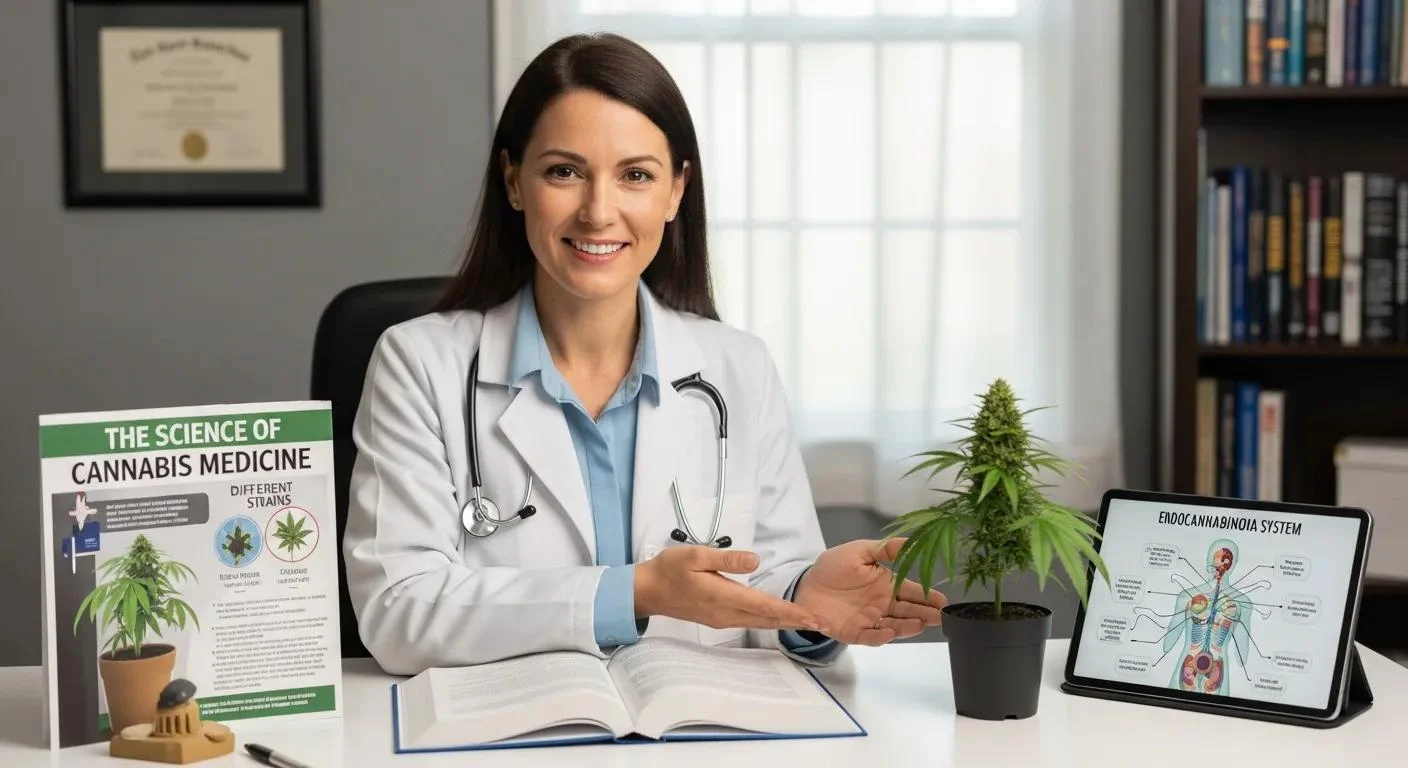
A medical marijuana doctor specializes by developing competencies in cannabinoid pharmacology, routes of administration, dose titration, and side-effect management specific to cannabis-based therapies. Specialization often includes focused continuing education in therapeutic cannabinoid profiles, interactions with other medications, and evidence-based approaches to conditions commonly treated with medical cannabis. During evaluations MMJ doctors synthesize medical history, prior treatments, and patient goals to recommend formulations and dosing plans that balance efficacy and safety. This focused clinical knowledge improves patient outcomes by tailoring therapy plans and providing structured follow-up to monitor benefits and adverse effects, which complements broader primary care management.
Specialized training enables these physicians to guide titration and delivery method selection, which naturally leads to why many PCPs do not provide MMJ recommendations in Florida.
Why Can’t Primary Care Physicians Prescribe Medical Marijuana in Florida?
Primary care physicians generally do not “prescribe” medical marijuana because state law frames cannabis access as a physician-issued recommendation entered into the Medical Marijuana Use Registry, and many PCPs choose not to register or specialize in cannabis care. The regulatory nuance is that physicians who recommend medical marijuana must follow state registry procedures, document qualifying conditions, and complete a 2-hour required course approved by the Florida Board of Medicine; some PCPs defer because of limited cannabis training, institutional policies, or concerns about liability. The practical result is that many patients are referred to a certified MMJ physician or a specialized service for the formal recommendation and registry entry. Patients who prefer a consolidated approach often seek a cannabis-focused clinician for the registry recommendation while maintaining their PCP for comprehensive health management.
These structural reasons explain the division of responsibilities and point toward the certification pathway patients in Naples can expect.
What Is the Naples Medical Marijuana Certification Process with My Florida Green?
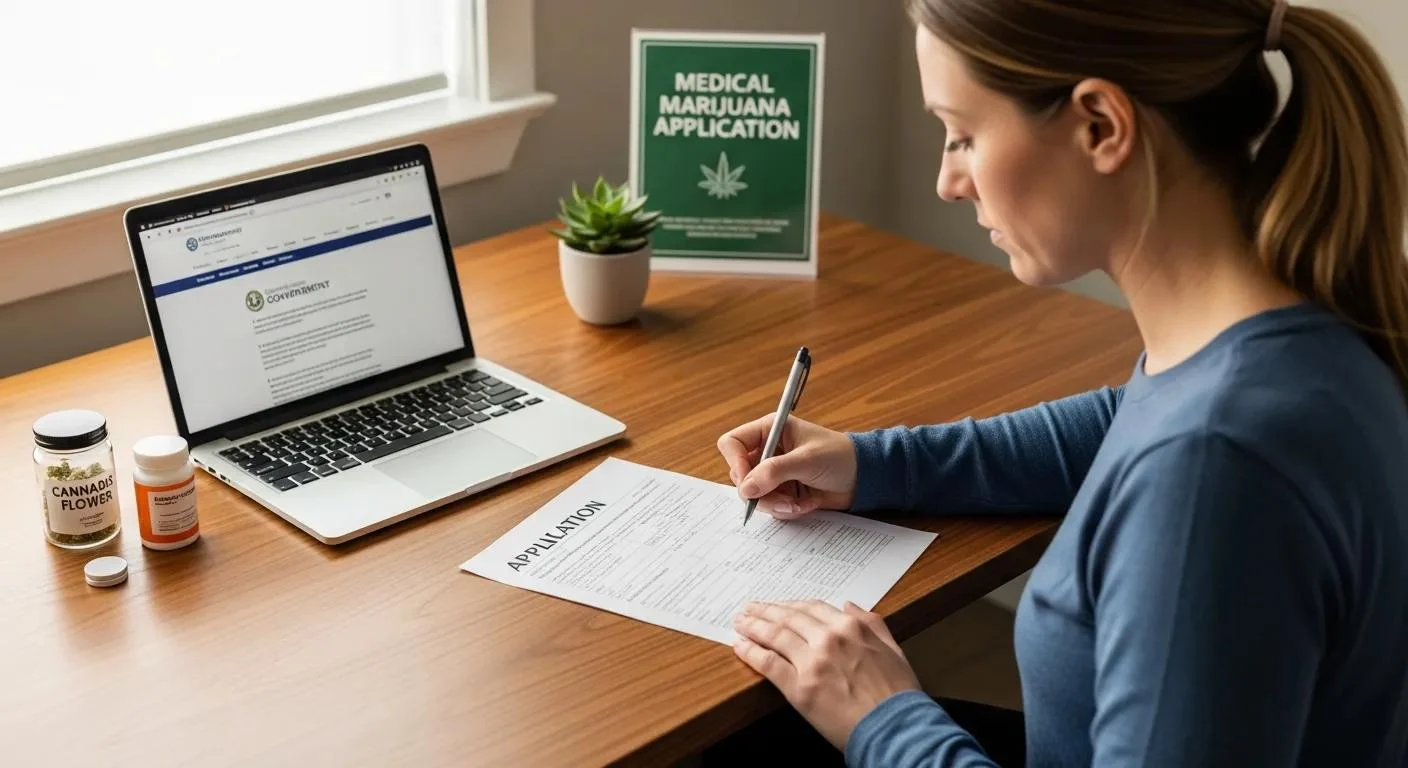
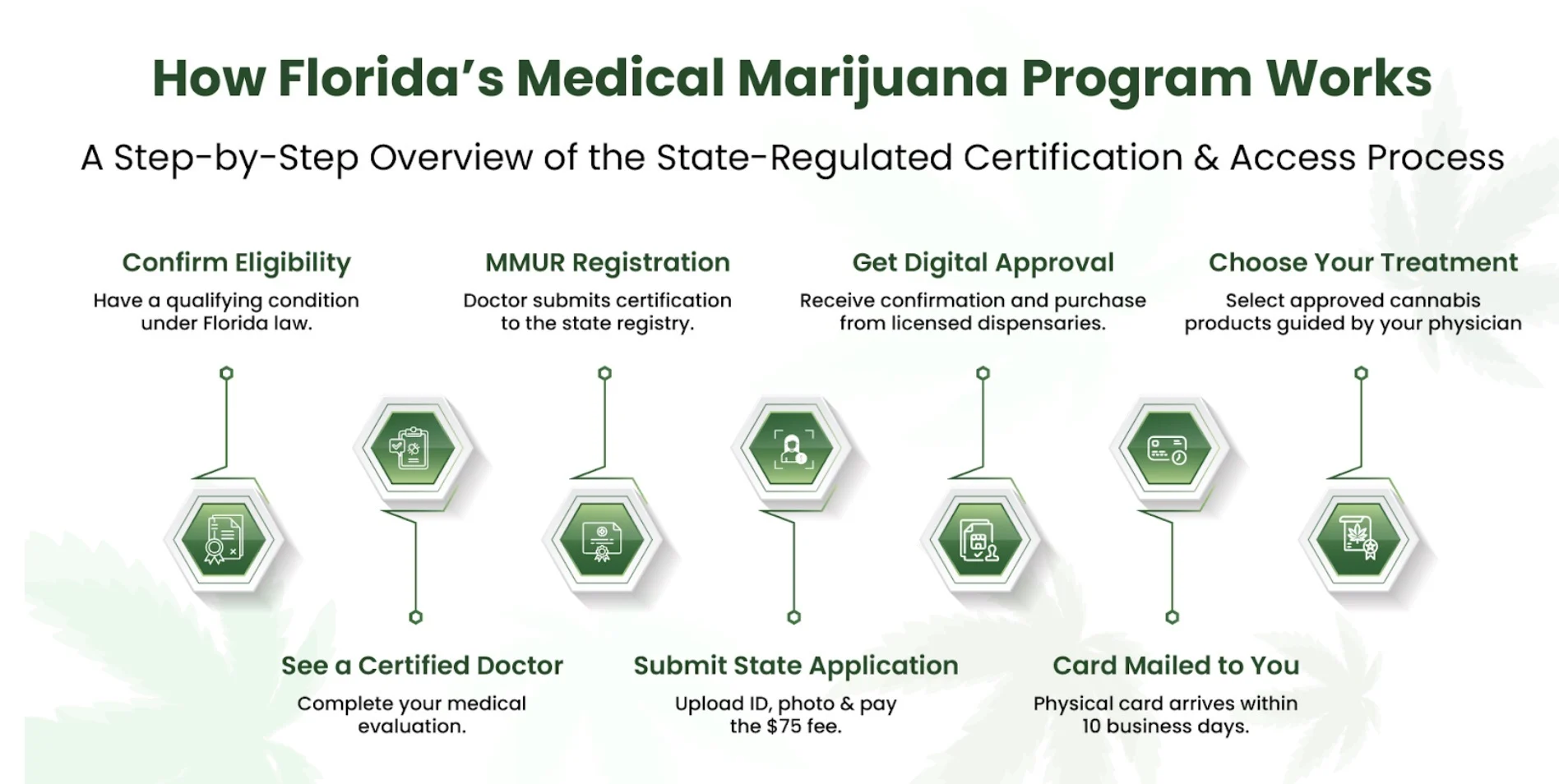
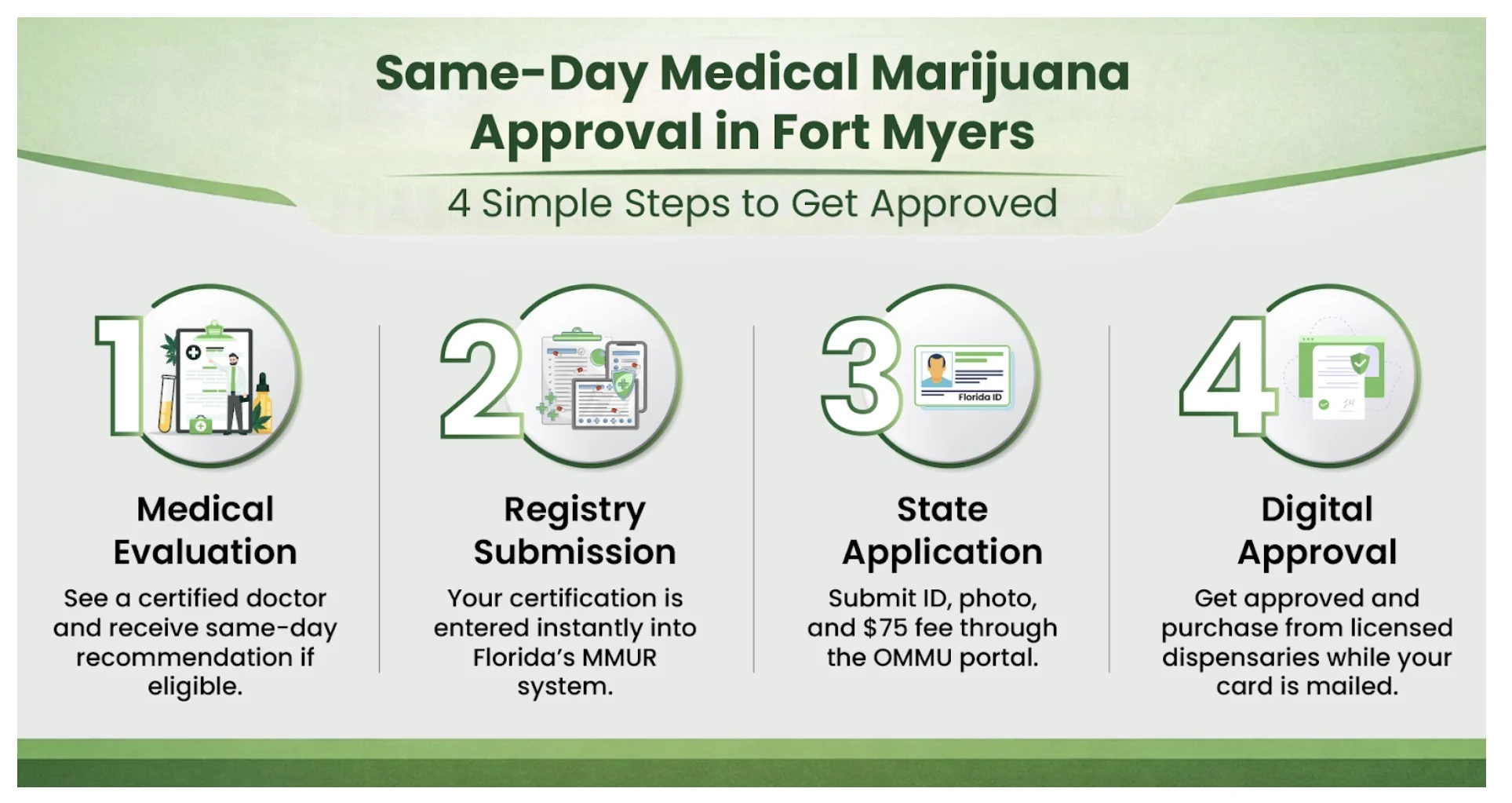
The Naples certification process typically follows a clear sequence: eligibility screening, clinical evaluation by a certified physician, issuance of a recommendation entered into the Florida Medical Marijuana Use Registry, payment of state fees, and receipt of the state card enabling dispensary access. An initial intake confirms qualifying conditions and collects medical records, followed by a medical evaluation that documents the recommendation when appropriate, and then registry submission and card issuance. My Florida Green’s role is to guide Florida patients through obtaining a medical marijuana card, provide education, connect patients with state-licensed medical marijuana doctors for evaluations, assist with Florida Medical Marijuana Card applications, and provide ongoing patient support. The platform positions itself under the tagline “Medical Marijuana Made Easy” and emphasizes a secure digital platform for patient management plus access to a network of state-certified physicians.
Below is a concise flowchart-style summary that maps common steps, who performs them, and typical durations or next actions.
| Step | Who / What | Duration / Next Action |
| Eligibility Intake | Patient / Intake platform | 1–3 days to collect records and confirm qualifying condition |
| Medical Evaluation | Certified MMJ physician (in-person or telemedicine) | 15–45 minutes for consult; physician issues recommendation if eligible |
| Registry Submission & Card Issuance | Physician / State registry | Varies by state processing; patient notified when approved |
How My Florida Green connects patients to certified physicians and supports application steps is detailed below to help readers evaluate whether this facilitation fits their needs. Pricing for services is transparent: new patient evaluations are $169, transfers are $149, and recertifications are $99; state card fee of $75 is excluded from these service fees.
How Does My Florida Green Connect Patients with Certified Medical Marijuana Doctors?
My Florida Green connects patients through a digital intake and scheduling system that matches individuals with state-certified physicians available for evaluations in Naples and across Florida. The process typically begins with an eligibility check and intake form, which the platform uses to route the patient to an appropriate clinician for an in-person or telemedicine consult depending on availability and state allowances. Patient support includes assistance with the application submission to the state registry and guidance on required documentation, aiming to simplify administrative steps for those new to the MMJ process. This coordination reduces back-and-forth and helps ensure the clinical encounter focuses on assessment and treatment planning rather than paperwork.
Efficient digital matching and administrative support help patients move from initial interest to registry recommendation with fewer hurdles, which naturally leads to the specific documentation required for a successful application.
What Are the Step-by-Step Requirements to Obtain a Florida Medical Marijuana Card?
Obtaining a Florida Medical Marijuana Card requires a documented qualifying condition, a valid government ID, proof of Florida residency, a physician recommendation entered into the state registry, and payment of state and service fees. Patients usually bring recent medical records or documentation that supports the qualifying diagnosis, and the evaluating physician reviews history, medications, and potential contraindications during the consultation. After the physician issues a recommendation the patient or facilitating service submits the application to the state registry, pays the state fee, and awaits card approval; timing varies by processing volume and completeness of documentation. Maintaining care typically involves periodic recertification, during which the physician reassesses symptom control and treatment effectiveness.
A checklist of practical items helps ensure a smooth application:
- Valid government-issued ID confirming identity.
- Proof of Florida residency, such as a utility bill or similar document.
- Medical records or documentation supporting the qualifying condition.
Completing these items before the visit reduces delays during evaluation and speeds registry entry.
Which Qualifying Conditions Allow Patients to Access Medical Cannabis in Florida?
Qualifying conditions in Florida include a range of chronic and severe health issues that physicians determine to benefit from medical cannabis; the definitive list is maintained by the state registry but common conditions include cancer, epilepsy, glaucoma, HIV/AIDS, post-traumatic stress disorder (PTSD), amyotrophic lateral sclerosis (ALS), Crohn’s disease, Parkinson’s disease, multiple sclerosis (MS), chronic nonmalignant pain, and terminal illnesses. Eligibility hinges on clinical judgment—physicians evaluate whether symptoms are refractory to conventional treatments or whether cannabis might provide substantial symptom relief and improved quality of life. Recent research and clinical practice patterns guide physicians in applying evidence and individualized risk-benefit assessments when considering a recommendation. Patients should expect the final determination to be medical and individualized, with documentation of history and prior therapies often supporting the evaluation.
To help clarify how conditions map to documentation expectations, the table below outlines common examples and typical evidence physicians review during eligibility assessments.
| Condition (Example) | How It Qualifies / Documentation Needed | Typical Evidence / Evaluation Notes |
| Chronic Pain | Demonstrated persistent pain affecting function | Pain history, prior treatments, imaging or specialist notes |
| PTSD | Ongoing PTSD symptoms impairing daily life | Mental health records, prior therapy notes, psychiatric evaluations |
| Severe Muscle Spasms | Recurrent, function-limiting spasms | Neurology or physiatry notes, medication history |
What Medical Conditions Qualify for Medical Marijuana Certification in Naples?
Common qualifying conditions in practice include chronic, treatment-resistant pain syndromes; PTSD and other psychiatric conditions when clinically appropriate; severe muscle spasms such as those from multiple sclerosis; and terminal or debilitating conditions where symptom control is a priority. Physicians review symptom severity, prior treatment responses, and functional impairment to decide whether medical cannabis is an appropriate therapeutic option. Because state rules and clinical judgment shape decisions, patients are encouraged to bring concise records that demonstrate the chronicity and impact of symptoms. Confirming eligibility during an intake reduces uncertainty and streamlines the medical evaluation.
Collecting targeted documentation before the visit often shortens the evaluation time and helps physicians provide timely recommendations.
How Do Medical Marijuana Doctors Evaluate Patients for Eligibility?
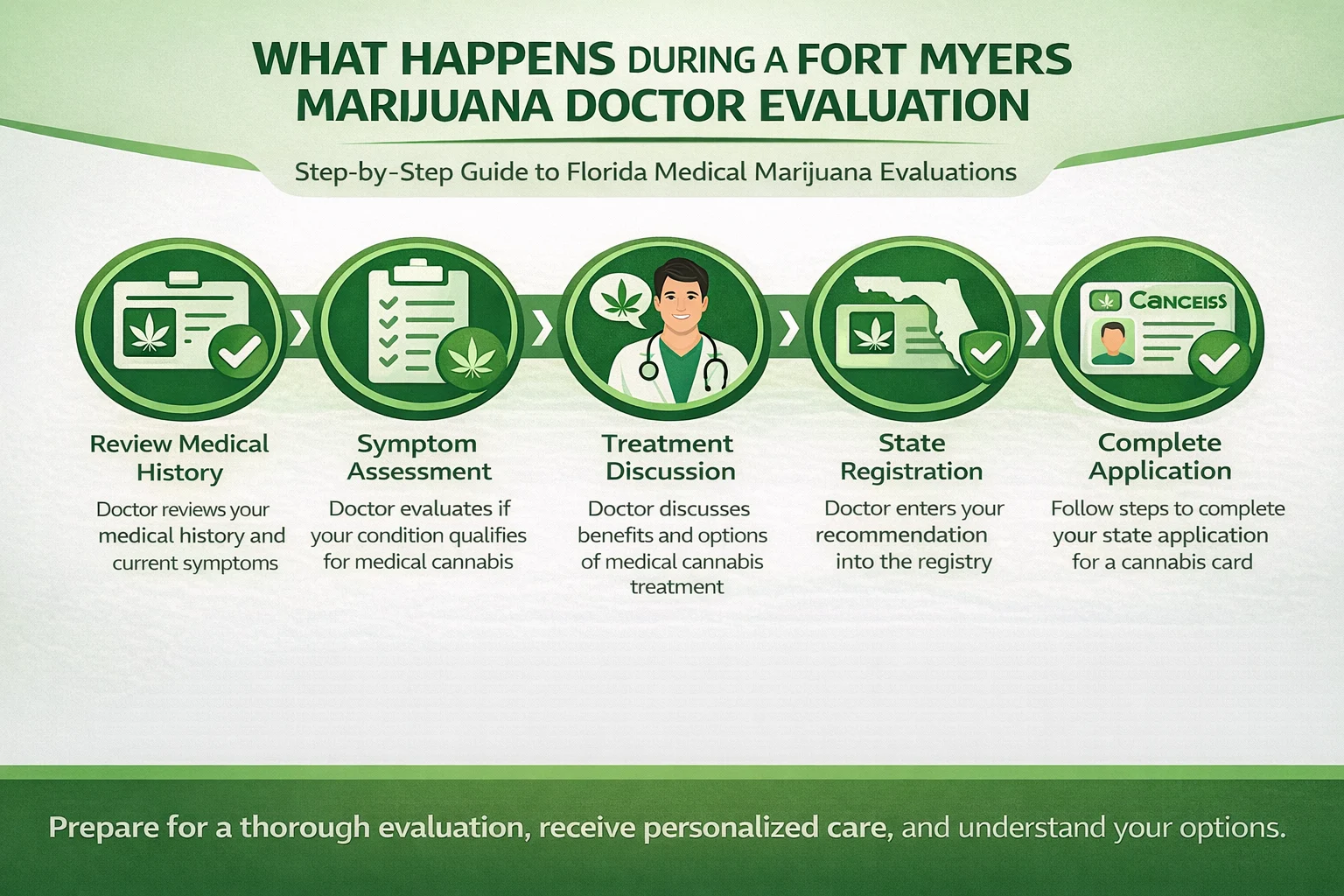
Evaluation typically includes a focused clinical interview, a review of medical records and prior treatments, an assessment of potential contraindications or drug interactions, and a shared decision-making conversation about expected benefits and risks. Physicians document findings and, if the patient meets clinical criteria, enter a recommendation into the state registry that allows the patient to apply for the Medical Marijuana Card. Follow-up plans often include monitoring for therapeutic response, side effects, and guidance on dosing and delivery methods to optimize safety and efficacy. This structured evaluation ensures that the recommendation aligns with both medical evidence and the patient’s individual health context.
Clear documentation and follow-up planning also help with future recertifications and continuity of care across providers.
How to Find a Licensed Medical Marijuana Doctor in Naples?
Patients can locate licensed MMJ doctors by checking the state registry for registered recommending physicians, reviewing clinic and telemedicine service options, and verifying provider qualifications and patient reviews where available. Key criteria to evaluate include state medical licensure, OMMU (state registry) registration, demonstrated experience with cannabis medicine, and clear processes for follow-up and recertification. Using a referral or facilitation service can reduce search friction by matching patient needs to available certified physicians, especially when telemedicine is an option. Confirming these elements helps patients choose a clinician who can provide both accurate documentation and ongoing symptom management.
Below is a short checklist of what to verify when comparing providers in Naples.
- Verify state medical licensure and registry registration. Confirm the clinician is authorized to recommend medical marijuana under Florida rules.
- Confirm experience with cannabis medicine. Look for clinicians who demonstrate knowledge of cannabinoid pharmacology and dosing.
- Check follow-up and recertification policies. Ensure the provider supports ongoing care and documentation needs.
What Are the Medical Marijuana Doctor Requirements in Naples, Florida?
Medical marijuana physicians must hold a valid Florida medical license and follow the state’s registration and documentation requirements to enter recommendations into the Medical Marijuana Use Registry. While the administrative registration is mandatory for recommending cannabis, additional cannabis-specific education and clinical experience are required by the state, including completion of a 2-hour course approved by the Florida Board of Medicine. Patients should look for clinicians who integrate medication review, risk assessment, and individualized treatment planning into their evaluations. Verifying these qualifications before the visit helps ensure the clinician can both recommend and provide appropriate follow-up for MMJ therapy.
Clear credential checks and asking about the clinician’s approach to dosing and monitoring are practical steps before scheduling a consult.
How Does My Florida Green Facilitate Access to Certified Cannabis Physicians?
My Florida Green facilitates access through a secure digital intake platform that guides patients through eligibility screening, scheduling with state-certified physicians, and assistance with registry submissions and recertifications. The service emphasizes patient education and ongoing support, connecting users to a network of experienced, compassionate, state-certified physicians who conduct evaluations for recommendations. By handling administrative steps and coordinating clinical appointments, the platform seeks to make the certification process more efficient for patients who may otherwise face fragmented care. This facilitation is especially useful for patients who want a streamlined path from consultation to registry entry while maintaining their relationship with a PCP for broader health needs.
These facilitation services reduce administrative burden and help patients focus the clinical visit on symptom assessment and treatment planning.
What Are the Benefits of Consulting a Specialized Medical Marijuana Doctor Over a Primary Care Physician?
Consulting a specialized medical marijuana doctor provides targeted expertise in cannabinoid therapy, legal and registry compliance, and individualized treatment plans that account for drug interactions and dosing strategies. MMJ physicians combine knowledge of therapeutic formulations, titration, and monitoring with the administrative experience needed to issue state registry recommendations accurately. This focused approach often results in more precise dosing guidance, better symptom management, and smoother registry submissions than relying on a generalist who may lack specific cannabis training. Patients benefit clinically and administratively from a provider who understands both the therapeutic nuances and the state processes that govern medical marijuana access.
For patients seeking specialist support, resources that connect them to certified MMJ physicians can simplify entry to care while preserving their PCP relationship for comprehensive health management.
How Does Specialized Cannabis Care Ensure Legal Compliance and Tailored Treatment?
Specialized cannabis care ensures legal compliance by documenting qualifying conditions appropriately, following state registry procedures, and maintaining records needed for recertification and continuity of care. Clinically, specialized providers tailor treatment plans by selecting delivery methods and formulations consistent with patient goals, comorbidities, and concomitant medications, then outlining titration schedules to minimize adverse effects. This combined legal-clinical approach reduces risk for patients and supports predictable access to authorized products at dispensaries. Coordinating with the patient’s broader care team also preserves holistic health management while addressing symptom-specific needs with cannabis therapies.
These practices protect patient access and help integrate cannabis therapy responsibly into the overall care plan.
Why Is Expertise in Florida Medical Marijuana Laws Important for Patients?
Expertise in Florida’s MMJ laws matters because procedural errors or incomplete documentation can delay registry entry and limit timely access to treatment. Physicians familiar with state rules can guide patients through required proofs, proper registry entries, and timing considerations that affect card approval and renewals. Knowledgeable clinicians also advise on permissible product categories, dosing considerations tied to state guidance, and record-keeping that facilitates recertification. This regulatory literacy ultimately safeguards patient access and ensures that clinical recommendations translate into approved registry entries and lawful use.
Avoiding administrative pitfalls speeds approval and preserves uninterrupted access for patients who rely on medical cannabis for symptom control.
What Are Common Patient Questions About Medical Marijuana Doctors vs Primary Care Physicians?
Patients frequently ask whether their PCP can recommend medical marijuana, what the timeline is from consult to card issuance, and how much the process costs when facilitated by a service. Short, direct answers are useful: a PCP may recommend if they are registered and choose to do so, but many do not; card timelines vary with documentation completeness and state processing; and facilitator service fees differ from state card fees. Understanding these distinctions helps patients plan visits, gather records in advance, and select a pathway that balances convenience, cost, and clinical oversight. The following brief answers address the most common patient concerns with actionable next steps.
Can My Primary Care Doctor Recommend Medical Marijuana in Florida?
Yes—if the primary care doctor is registered with the state registry and chooses to issue a recommendation, they can recommend medical marijuana; however, many PCPs do not register or prefer to refer patients to a specialized MMJ physician. The legal framework allows any licensed physician to recommend cannabis provided they complete the state’s registry requirements and documentation, but practical barriers such as limited training, institutional policies, or workload often lead PCPs to defer recommendations. Patients uncertain about their PCP’s participation should ask directly about registry registration or request a referral to a certified MMJ clinician. If a PCP will not provide a recommendation, a specialist or facilitation service can complete the evaluation and registry entry while the PCP continues to manage overall health.
Asking about registry registration status before scheduling helps patients avoid unnecessary appointments and accelerates the certification pathway.
How Long Does It Take to Get a Medical Marijuana Card in Naples?
The timeline from initial consult to receiving a Medical Marijuana Card depends on how quickly the patient completes intake documentation, how promptly the physician issues a recommendation, and state processing times after registry submission. A well-prepared patient who brings medical records and ID can often complete the evaluation within days, with state card approval varying from several days to a few weeks depending on registry workload and completeness of the application. To speed the process, patients should gather medical records, confirm residency documents, and use facilitation services that assist with timely submission. Monitoring communication from the registry and responding promptly to any requests minimizes delays and helps ensure more predictable card issuance.
Being proactive with documentation and choosing streamlined submission pathways typically reduces wait times and improves the overall experience.