Finding a licensed medical marijuana doctor in Naples, FL starts with knowing who can legally make recommendations, what paperwork and records you’ll need, and how to pick a clinician who combines medical know‑how with everyday guidance. This guide walks Naples residents through eligibility rules, the step‑by‑step certification process, common qualifying conditions, typical costs, local clinician options, and ongoing education and product help. If the Florida registry, required documents, or choosing the right doctor feels confusing, this article breaks each stage into clear, practical steps so you can prepare for your visit and move from research to booking with confidence. You’ll learn how to check a physician’s credentials, what to bring to your first appointment, how doctors document “other debilitating conditions,” and what to expect when it’s time to renew. The guide also points to patient tools and local clinic strengths that make the process easier for Naples residents.
Why choose a licensed medical marijuana doctor in Naples, FL?
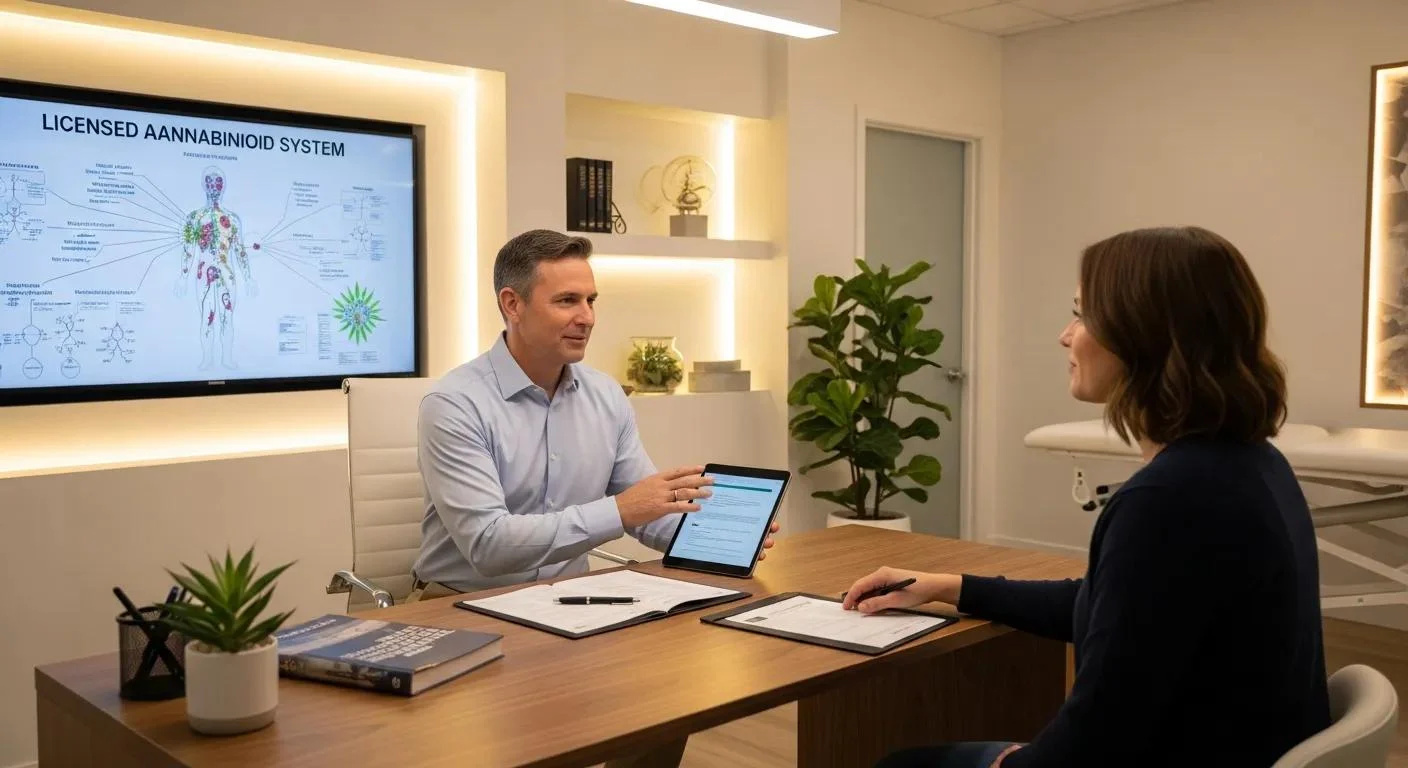
A licensed medical marijuana doctor gives you clinical oversight, legal protection, and continuity of care. Registered physicians submit certifications through the Florida Medical Marijuana Use Registry, which ensures recommendations are documented and tied to medical records. Local Naples providers add practical benefits—familiarity with nearby dispensaries, community resources, and follow‑up care that fits local rules and patient needs. Choosing a licensed clinician lowers legal and medical risk and improves the chances of receiving safe dosing guidance and reliable follow‑up aligned with Florida law and accepted clinical practice.
My Florida Green helps patients statewide with a clear certification process, access to a network of licensed Florida physicians, and a patient‑management platform called TheDocApp that keeps records and reminders in one place. Our three‑step approach—establish care, physician evaluation, and registry submission—aims to reduce administrative friction and set clear expectations from first contact to certification. We focus on affordable pricing and compassionate support and offer continuing education through a blog and podcast. For Naples patients, these operational strengths typically mean quicker scheduling, documented care continuity, and tools to manage renewals and post‑certification product guidance.
What makes a medical marijuana doctor licensed and able to certify in Florida?
A licensed medical marijuana doctor in Florida is a physician who holds a valid Florida medical license, uses clinical judgment backed by medical records, and is registered with the Florida Department of Health’s Office of Medical Marijuana Use (OMMU) to submit patient certifications. You can confirm a doctor’s ability to certify by asking whether they are registered to file recommendations with the state registry and whether they document qualifying conditions and treatment plans in the medical record. Verifying licensure and prior experience certifying patients helps ensure recommendations meet statutory standards and protects your interests.
Before your visit, consider this brief checklist to confirm credentials during intake:
- ask whether the physician is registered to certify medical marijuana
- request confirmation of their Florida medical licensure if available
- confirm how the clinic documents treatment plans for registry submission
Clearing these points before your evaluation sets expectations around documentation, follow‑up, and whether visits will be telehealth or in‑person. That transparency also shows how a local clinic can simplify the certification workflow for Naples patients.
How does My Florida Green simplify your medical marijuana certification?
My Florida Green uses a focused three‑step workflow to reduce paperwork and make timelines clear for patients seeking a Florida medical marijuana card. Step one establishes care and gathers medical history and supporting records. Step two is a physician assessment to determine clinical eligibility. Step three covers registry submission and next steps. TheDocApp secures records, sends reminders, and supports telehealth follow‑ups when appropriate. This setup cuts down on repeated paperwork, gives clinicians better access to prior records, and helps support consistent follow‑up care.
Patients see clear role separation: administrative staff handle intake and paperwork, clinicians perform the clinical assessment and documentation, and TheDocApp tracks renewals and follow‑ups. That structure keeps clinical judgment at the center of certification decisions and gives patients a straightforward path to receive education and product guidance after they’re certified. With clear workflow, it’s easier to plan your visit and know expected timelines for registry approval and ID issuance.
What is the step‑by‑step process to get a medical marijuana card in Naples?
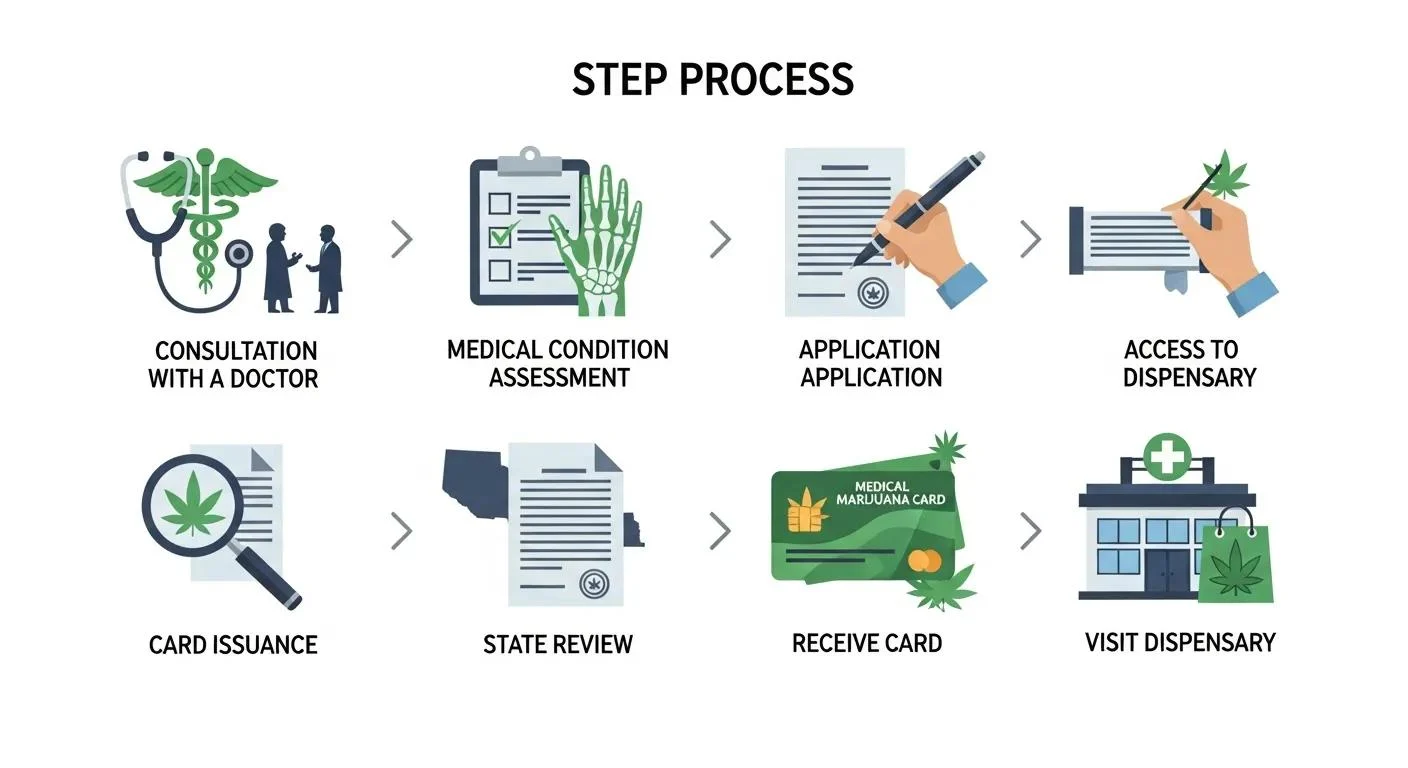
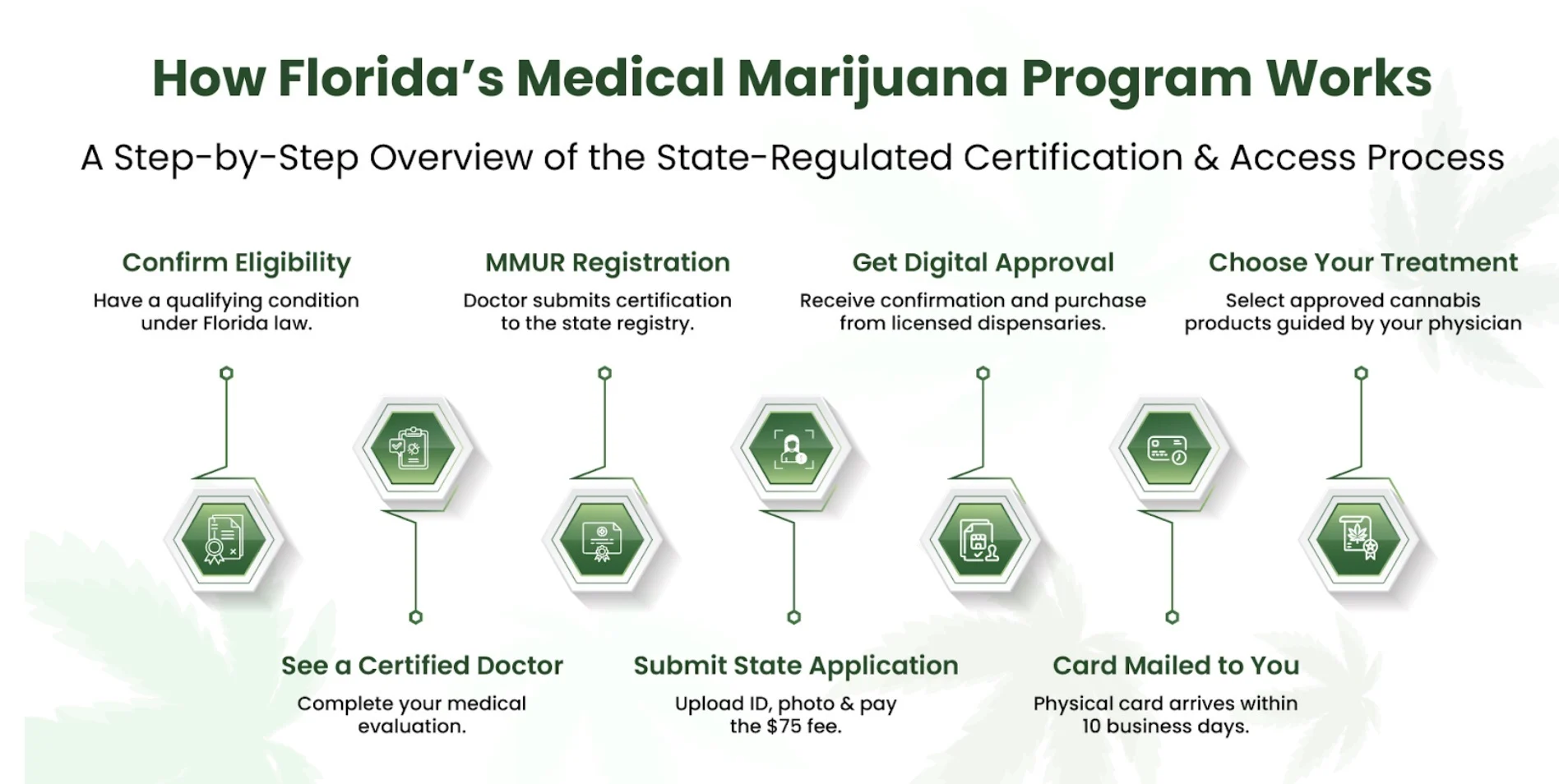
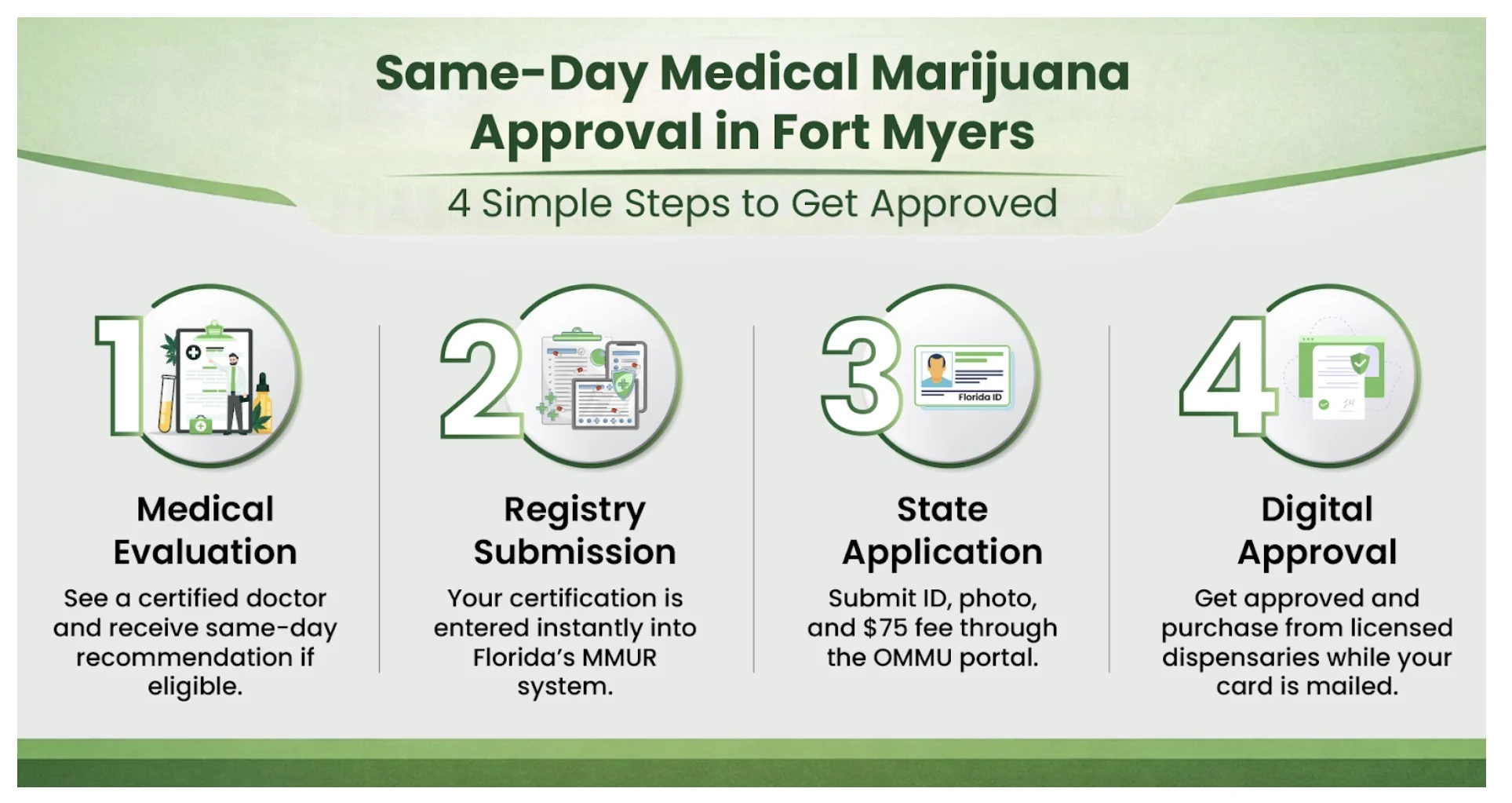
Getting a Florida medical marijuana card generally follows three straightforward steps: establish care with a qualified physician, complete a clinical evaluation to confirm eligibility, and register the physician’s recommendation with the state registry. Each step has specific documents, actions, and realistic timelines that affect overall approval. Knowing this three‑step flow helps you gather records in advance, understand when telehealth is appropriate, and prepare for the registry submission.
- Establish care and prepare records: Collect your ID, relevant medical records, and a current medication list before scheduling an evaluation.
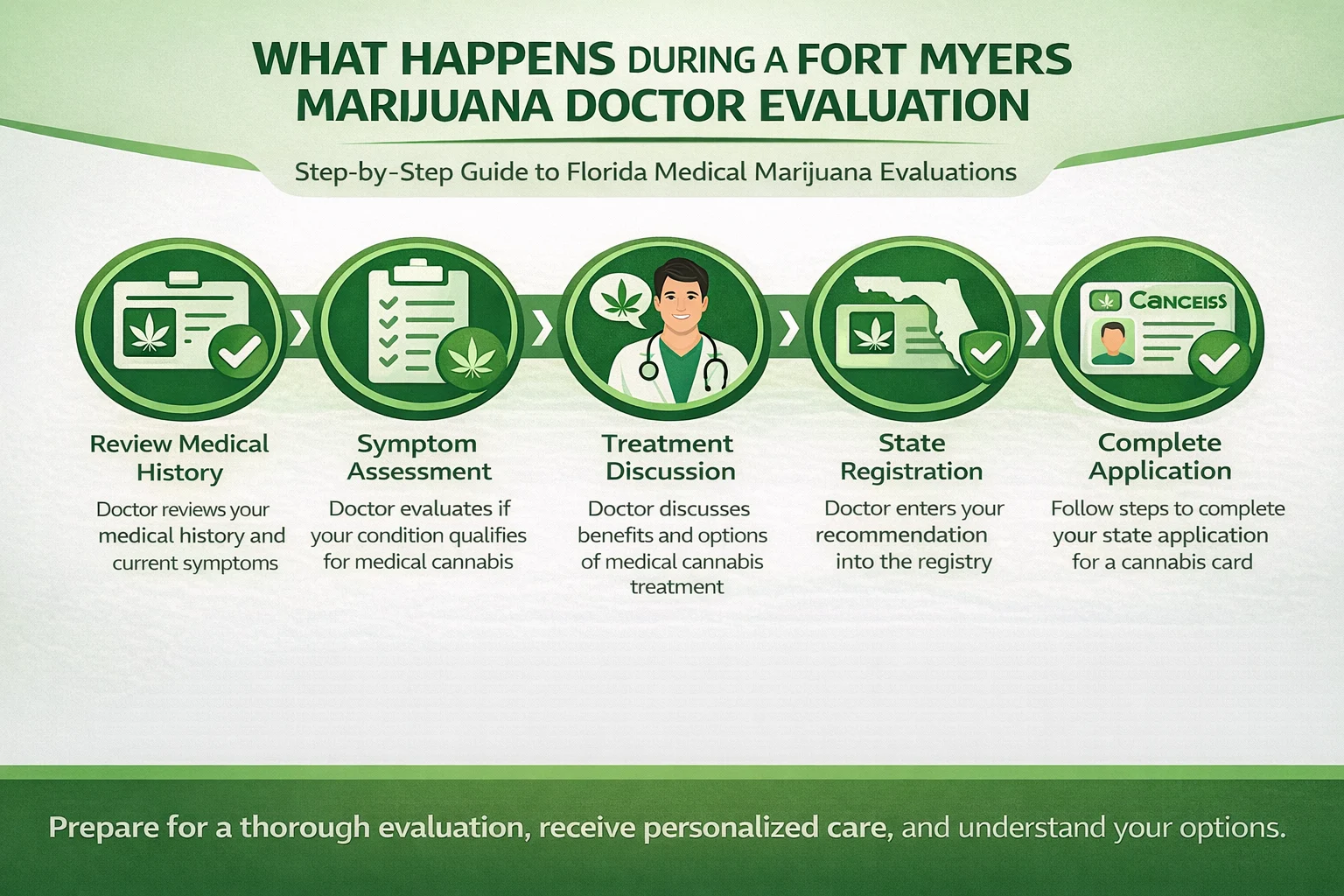
- Complete physician evaluation: Attend a clinical assessment where the physician documents a qualifying condition and decides if medical cannabis is suitable.
- Registry submission and approval: The clinician submits the recommendation to the Florida registry and you complete the state registration to receive your ID.
This sequence highlights predictable milestones and clarifies what you’re responsible for, including typical timing and administrative fees tied to each phase.
Quick summary of certification steps and expected timing:
| Step | What happens | Expected time / Action required |
| Step 1 — Establish care | Patient supplies medical history, ID, and supporting records | 1–7 days to collect records; appointment scheduling varies |
| Step 2 — Physician evaluation | Clinical assessment and physician recommendation | Usually a single visit (telehealth or in‑person) with documentation |
| Step 3 — Registry submission | Physician files the recommendation; patient completes state registration | Registry processing times vary; patient gets ID once approved |
Use this table to plan what to gather and to anticipate administrative steps during certification.
How to establish care and schedule your evaluation with a Naples physician?
Establishing care starts with collecting medical records that support a qualifying condition and booking an appointment with a licensed Naples physician who certifies medical marijuana. Bring a government‑issued ID, a concise summary of relevant medical history, a list of current medications, and any specialist notes or test results that document chronic issues—complete records speed clinical decision‑making.
When you contact a clinic, ask whether they offer telehealth or in‑person appointments and whether the initial visit includes a medication and symptom review or will require extra testing. Good preparation leads to a focused evaluation, quicker documentation of eligibility, and a smoother registry submission.
Confirm whether the clinic uses a patient‑management platform to upload records before your visit to reduce wait times and enable secure follow‑up. Many practices recommend bringing a written list of symptoms and questions so clinicians can efficiently document the clinical rationale needed for certification. Knowing the evaluation logistics also helps you understand what the state registry requires for final approval.
What are the state requirements and application steps for the Florida medical marijuana card?
Florida requires a licensed physician’s recommendation and the patient’s registration with the state medical marijuana registry to issue an ID. Typical documentation includes proof of identity, medical records that support a qualifying condition, and the physician’s submitted certification. Approval timelines depend on registry processing, the completeness of records, and any additional checks; missing or incomplete medical records are common causes of delay. Be proactive: gather specialist notes, imaging reports, and medication histories that document clinical need.
If problems arise, practical steps include confirming the physician filed the recommendation, making sure you completed the registry application, and checking for any required state fees or updates. Setting reminders—through a clinic platform or your personal calendar—helps prevent lapses and ensures timely renewals. Understanding these administrative expectations reduces delays and speeds the path from evaluation to an approved ID.
Which medical conditions qualify for medical marijuana certification in Florida?
Florida law lists specific qualifying conditions for medical marijuana and allows physicians to certify other debilitating conditions when supported by clinical evidence. Qualifying cases often include chronic, progressive, or treatment‑resistant illnesses where standard therapies are ineffective or cause intolerable side effects. Doctors evaluate “other debilitating conditions” using the patient’s medical history, specialist notes, and diagnostic tests to determine whether the condition meets the threshold for recommendation. Talk with a licensed physician to review your situation and learn which records best support eligibility.
- Cancer and treatment‑related symptoms that cause significant distress.
- Chronic neurological disorders such as epilepsy or intractable seizure conditions.
- Severe chronic pain that hasn’t responded to conventional treatments.
This overview helps you spot possible eligibility and shows how physicians review non‑standard conditions when supported by documentation.
What are the official qualifying conditions recognized by Florida law?
Official qualifying conditions commonly include cancers with related symptoms, epilepsy and seizure disorders, glaucoma, post‑traumatic stress disorder (PTSD), and chronic debilitating pain when documented in the medical record. Each condition typically requires supporting evidence—medical records, specialist reports, or diagnostic testing—that shows a persistent or severe health impact potentially relieved by medical cannabis. Because the list can change, confirm current qualifying conditions with a licensed physician during your evaluation so you prioritize the right records for submission.
Clinicians usually draft condition‑specific notes detailing symptom severity, prior treatments, and how cannabis might fit into the overall plan. Those notes help registry reviewers and make the clinical rationale for certification clear. This process links naturally to how doctors document “other debilitating conditions.”
How do physicians certify “other debilitating conditions” for eligibility?
When certifying “other debilitating conditions,” physicians apply clinical judgment backed by objective evidence—medical records, diagnostic testing, and specialist input—that shows significant impairment or treatment resistance. Examples might include chronic autoimmune disease, persistent neuropathy, or other disorders that substantially limit daily functioning despite conventional therapy. Doctors record the clinical reasoning in the medical chart and explain how cannabis is expected to target symptoms so registry reviewers can see the rationale. Strong, transparent documentation is key to this discretionary pathway.
To strengthen an “other” certification, gather medical summaries, specialist letters, and detailed treatment histories. Comprehensive records give clinicians the evidence they need to justify recommendations under state rules and improve the likelihood the certification will be accepted.
How much does it cost to get certified and renew your medical marijuana card in Naples, FL?
Costs usually break down between clinic fees (physician evaluations and administrative support) and state registry fees (application and ID issuance). Clinic pricing varies—some include evaluation, follow‑up, and registry submission help in one fee while others separate those services. Transparent cost conversations let you budget for initial certification and annual renewals; clinics that commit to affordable pricing typically explain what their fee covers, such as counseling, documentation, and electronic follow‑up. Comparing clinic offerings and state fees helps avoid surprises and supports an informed choice.
Below is a practical overview of common fee categories and timing to help you plan:
| Fee Item | What happens | Expected time / Action required |
| Initial evaluation (clinic fee) | Physician assessment at your first visit | Includes clinical exam, paperwork, and follow‑up planning; varies by clinic |
| State registry application fee | Patient pays during state registration | State processing fee; amount can change—confirm current rate |
| Renewal / transfer fees | Applied at renewal or when transferring care | Clinic or state fees may apply; plan renewals ahead of time |
This table shows patients commonly face both clinic and state costs and that clinics differ in how they bundle services and follow‑up care.
What are the typical fees for initial certification, transfers, and renewals?
Clinic fees typically cover the initial physician visit, the creation of a treatment plan, and administrative work to submit the certification; follow‑up visits or telehealth renewals may be priced separately. Because pricing varies, ask exactly what the evaluation fee includes—symptom counseling, access to TheDocApp, or post‑certification follow‑up—so you can compare value rather than price alone. Transfers and renewals often involve a shorter visit or telehealth check‑in, which clinics may price differently than the initial assessment. Clear communication about included services helps avoid unexpected charges and lets you pick a provider whose care model fits your budget and needs.
Clinics that focus on affordability often publish general pricing and have staff available to explain payment options; still, confirm current fees with the clinic before booking. That way you can estimate total out‑of‑pocket costs and plan for renewals to keep access uninterrupted.
What are the state application fees and renewal timelines?
State application fees are set by the registry and required to complete patient registration and receive an official medical marijuana ID; both fees and timelines can change, so verify current amounts when you apply. Renewals generally require an annual re‑evaluation by a licensed physician and re‑submission to the registry to keep your card active. Missing renewal deadlines can cause lapses in access, so set calendar reminders and use clinic or platform alerts to stay on schedule. Knowing state fees and renewal cadence helps you plan financially and medically for ongoing access.
Practically speaking, confirm current state fees and renewal windows with your certifying physician or clinic platform so you avoid interruptions in care and dispensing access.
Who are the licensed medical marijuana doctors at My Florida Green Naples?
The Naples care team at My Florida Green includes licensed physicians and a network of certified providers who perform evaluations, document qualifying conditions, and support patient education and follow‑up. We prioritize clinicians who are registered to submit recommendations to the state registry and who use TheDocApp to keep records and reminders current. Clear clinician profiles help you choose a physician whose experience matches your medical needs and who can provide dosing guidance, symptom monitoring, and timely renewals.
| Clinician | Specialty / Role | Notes |
| Dr. Athina Kyritsis | Naples clinic physician; certifying clinician | Primary Naples contact for evaluations and ongoing patient guidance |
| Network-certified physician | General certifying physician | Part of our licensed Florida physician network serving multiple locations |
| Telehealth certifying physician | Remote evaluation option | Supports follow‑ups and renewals via telehealth when appropriate |
What is Dr. Athina Kyritsis’s role and experience in medical cannabis care?
Dr. Athina Kyritsis is the named clinician associated with Naples services. She performs patient evaluations, documents the medical rationale for certification, and provides practical guidance on product selection and follow‑up monitoring. Many patients look for a clinician who can both certify and offer day‑to‑day recommendations for symptom management; having a named provider gives you a clear point of contact and reassures you that evaluations are handled by a physician familiar with Florida’s certification rules.
Ask about scheduling, whether Dr. Kyritsis offers telehealth follow‑ups, and how the clinic records treatment plans to ensure consistent record‑keeping. Knowing these details improves the experience from the first visit through renewals.
How can you meet other certified physicians at the Naples clinic?
To meet other certified physicians, schedule an initial evaluation or a follow‑up visit and confirm whether same‑day appointments, scheduled slots, or telehealth options are available. We offer multiple booking channels and use TheDocApp to coordinate appointments and let you upload records before your visit so clinicians can review your history in advance. Ask about average appointment lengths, whether walk‑ins are accepted, and options for telehealth renewals or symptom check‑ins. Choosing a long‑term clinician depends on specialty, communication style, and availability for follow‑up care.
Understanding scheduling logistics helps you pick a clinician for ongoing management rather than a one‑time certification, which supports clearer dosing guidance and better outcomes. Knowing how clinicians coordinate care makes it easier to plan periodic reviews and symptom tracking.
How can patients benefit from medical marijuana education and support in Naples, FL?
Education helps patients choose the right product form, understand dosing strategies, and track effects to improve outcomes while minimizing side effects. Clinics that prioritize learning provide resources on product types, routes of administration, safety issues, and how to report symptom changes to your certifying physician. Ongoing support through a patient‑management platform can deliver follow‑up reminders, enable symptom tracking, and centralize educational content like blog posts and podcasts that answer common questions. Good education empowers you to participate in shared decision‑making and to adapt treatment safely based on real‑world results.
Beyond product basics, clinicians and clinic resources can guide you to local dispensary options, suggest conservative starting doses, and help you set up monitoring plans to evaluate effectiveness and side effects over time. That structured support reduces trial‑and‑error and clarifies clinical follow‑ups.
What types of medical cannabis products and dosages are available?

Medical cannabis comes in many forms—smoked or vaporized flower, tinctures and oils, edibles, topicals, and inhalable cartridges—each with different onset times, duration, and use cases. Physicians recommend products based on your symptoms, need for quick relief, and safety considerations; inhaled options act quickly, while oral products last longer. Dosing usually follows a “start low, go slow” approach, with gradual titration and symptom monitoring. Clinicians record dosing recommendations in follow‑up notes to support safe use and guide renewals. Consulting a certifying physician ensures dosing aligns with your medical history and any other medications you take.
Talk with your clinician about preferred routes of administration, expected onset and duration, and a monitoring plan so you choose a product that matches your goals. Clear documentation supports safer titration and ongoing care.
How does My Florida Green support patients through the certification journey?
My Florida Green helps patients at every step—booking appointments, using TheDocApp for secure record keeping and reminders, and offering educational content like our podcast and blog. TheDocApp centralizes your medical history, scheduling, and renewal alerts so you stay up to date with documentation and follow‑ups. Our staff and clinicians guide you from intake to registry submission and continue support after certification with dosing advice and symptom tracking. That continuum—from scheduling to post‑certification education—helps you move from an initial visit to ongoing symptom management with clarity.
By combining administrative support, clinician evaluation, and accessible education, the clinic helps you maintain an active registration, make informed product choices, and track outcomes over time. This model promotes safer use and keeps treatment aligned with your goals under physician oversight.
Frequently asked questions
What should I bring to my first appointment with a medical marijuana doctor?
Bring a government‑issued ID, a summary of your medical history, a current medication list, and any specialist notes or records that support your qualifying condition. Having these documents ready helps the physician assess your case quickly and accurately for certification.
Can I use telehealth for my medical marijuana evaluation in Naples?
Yes—many licensed medical marijuana doctors in Naples offer telehealth evaluations. Remote visits can be more convenient for those with mobility issues or who prefer not to travel. During a telehealth appointment the physician will review your history and determine eligibility much like an in‑person visit. Confirm availability and any technical requirements with the clinic before your appointment.
How often do I need to renew my medical marijuana card in Florida?
Medical marijuana cards in Florida generally require renewal every 12 months. Renewal involves a follow‑up evaluation with a licensed physician to assess ongoing need and a re‑submission to the state registry. Schedule your renewal in advance to avoid any lapse in access.
What happens if my medical marijuana card expires?
If your card expires you lose legal access to purchase and use medical cannabis until it’s renewed, which can interrupt your treatment. To prevent this, track your expiration date and book a renewal appointment early. If your card has already expired, you may need a new evaluation to re‑establish eligibility.
Are there any age restrictions for obtaining a medical marijuana card in Florida?
Yes—patients must be at least 18 years old to apply on their own. Minors can qualify with a qualifying condition, but a parent or legal guardian must be involved in the application and consenting to treatment. This process ensures the minor’s safety and proper oversight.
What should I do if my medical condition changes after certification?
If your condition changes, notify your physician during a follow‑up visit. Changes may affect your treatment plan, dosage, or product choice. Your doctor can reassess and adjust your certification or recommendations so your care stays appropriate and effective.
Conclusion
Finding a licensed medical marijuana doctor in Naples, FL gives you a clear, supported path to certification and safer, more effective care. Understanding the steps, documentation, and how to choose a qualified physician helps you get the right care for your needs. When you’re ready, schedule an evaluation with a trusted local provider and use our resources to learn more about optimizing your medical cannabis experience.